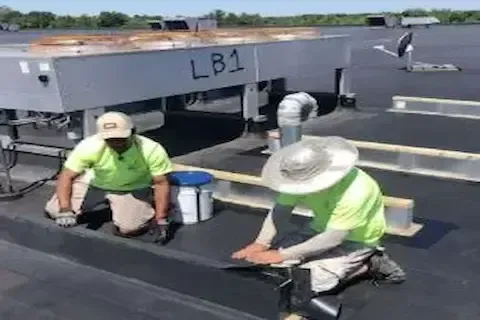
Annual Roof Inspection Checklist for Coon Rapids Sites
An annual commercial roof inspection in Coon Rapids follows a structured sequence: check seams and laps first, then drains and scuppers, then flashings at all penetrations, and finally the membrane surface itself. For flat roofs in Anoka County, freeze-thaw cycles and spring snowmelt make these four areas the most common failure points. A systematic checklist approach lets facility managers catch small issues before they become emergency repairs. The steps below apply to TPO, EPDM, and built-up roofing systems common across Coon Rapids commercial properties.
Step 1: Inspect All Seams and Lap Joints
Start at the roof perimeter and work inward in a grid pattern. On TPO and EPDM systems, press firmly along every seam to check for delamination or open laps. Seams that lift even slightly allow water infiltration during Coon Rapids freeze-thaw cycles, where temperatures can swing 40 degrees between day and night in March and April. Look for bubbling, fishmouthing, or any area where the top ply separates from the layer below. Mark each suspect location with chalk or a weatherproof marker so your roofing contractor can address them precisely. Seam failures account for a significant percentage of flat roof leaks on commercial buildings throughout Anoka County.
Step 2: Clear and Evaluate All Drains and Scuppers
Clogged drains are the single fastest path from a minor maintenance issue to interior water damage. Remove all debris from primary drains, overflow drains, and scuppers before evaluating their condition. Once clear, pour water into each drain and confirm it flows freely. Inspect the drain bowl for cracks, corrosion, or separation from the surrounding membrane. On flat roofs across Coon Rapids commercial districts along Coon Rapids Boulevard and Highway 10, ponding water from blocked drains accelerates membrane degradation and adds structural load. Check that all drain strainers are intact and seated properly. If any drain shows rust staining or standing water rings from the previous season, flag it for immediate attention.
Step 3: Examine All Flashings and Penetration Details
Flashings at HVAC curbs, pipe penetrations, skylights, and parapet walls are the most vulnerable points on any flat commercial roof. Inspect each flashing for cracking, pulling away from the substrate, or deteriorated caulk and sealant. Metal counterflashings should be firmly embedded and free of rust. On older commercial buildings in Coon Rapids, flashing at parapet walls often shows deterioration before the field membrane shows any distress. Check that pitch pockets around conduit and pipe stacks are filled flush and not cracked. Any flashing that has separated even a quarter inch from its base is an active leak risk before the next rain event.
Step 4: Assess the Membrane Surface Condition
Walk the entire field of the roof systematically, looking for surface erosion, blisters, punctures, and granule loss on modified bitumen systems. On TPO and EPDM, watch for surface cracking, UV chalking, or any area where the membrane appears thin or brittle. Blisters indicate moisture trapped beneath the membrane and should be probed carefully. Note any areas of soft or spongy substrate underfoot, which indicate saturated insulation. Anoka County building inspectors and insurance carriers often require documented membrane condition assessments for large commercial properties. Photograph every defect with a timestamp for your maintenance records.
Step 5: Document Findings and Prioritize Repairs
A completed inspection has no value unless the findings are recorded and acted on. Create a written log with photos organized by roof zone. Classify each issue as immediate, near-term, or monitor-only. Immediate items include open seams, separated flashings, and blocked drains. Near-term items include surface erosion and minor blistering that has not yet compromised the membrane. Monitor-only items are early-stage concerns to track at the next inspection. This documentation also supports warranty compliance for manufacturer-backed roofing systems, which is common on commercial properties that received Commercial Roof Inspection services after major re-roofing projects.
Step 6: Schedule Follow-Up with a Qualified Roofing Contractor
Self-performed inspections identify problems, but correction requires a licensed commercial roofing contractor familiar with Coon Rapids building codes and Anoka County permit requirements. For any repair that involves re-seaming, flashing replacement, or membrane patching over more than a small area, a professional assessment ensures the repair method matches your existing system. Attempting incompatible repairs on a warranted roof system can void coverage. Review your findings from this checklist alongside a commercial roof inspection program to determine whether your property needs a one-time repair visit or an ongoing maintenance agreement. Annual documentation also builds a repair history that supports insurance claims and informs long-term capital planning for your facility.
