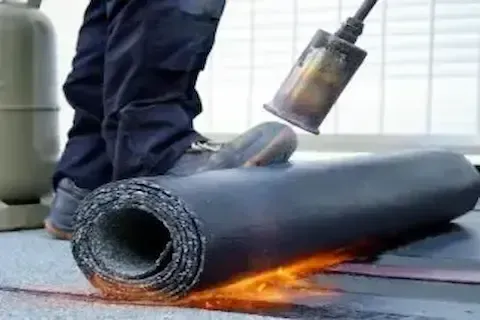
Cold Applied Modified Bitumen for Coon Rapids Rooftops
Most flat roof failures in Anoka County don't start with the membrane itself — they start with the installation method. When a torch is applied too close to aging insulation, a combustible deck, or a substrate that holds residual moisture, you're introducing risk that has nothing to do with the quality of the material. Cold applied modified bitumen removes that variable entirely. Instead of heat-welding layers together, cold-applied systems use adhesive bonding, pressure, and properly formulated modified bitumen membranes to create a watertight assembly without any open flame on the job site.
What Cold Applied Modified Bitumen Actually Means
Modified bitumen membranes come in two primary application categories: heat-welded (torch-down or hot-mopped) and cold-applied. Cold-applied systems use solvent-based or water-based adhesives to bond the membrane plies to each other and to the substrate. The bitumen in the membrane is still modified — typically with APP or SBS polymers that improve flexibility and UV resistance — but no heat source is needed to activate the bond.
This distinction matters for Coon Rapids commercial and industrial rooftops where the deck or interior use creates flame restrictions. Manufacturing facilities, distribution warehouses, and multi-tenant commercial buildings throughout the area commonly have provisions in their insurance policies or fire codes that limit or prohibit open flame work at roof level. Cold-applied systems meet those restrictions while still delivering a fully adhered, multi-ply membrane system.
Where Cold Application Makes Sense in Coon Rapids
Not every flat roof in Coon Rapids is a candidate for cold-applied mod bit, but a substantial portion are. The criteria that push a project toward cold application include occupied buildings where torch work creates liability or evacuation concerns, decks with combustible components like wood nailers or OSB recovery boards, and insulation assemblies that use foam products near the surface. Polyisocyanurate and EPS insulation boards can be damaged or off-gassed by torch heat even when a contractor is being careful.
Cold-applied systems are also worth considering on re-roofing projects where the existing membrane is being recovered rather than torn off. Adding a new adhered cap sheet over a clean, primed existing surface is a common approach in Anoka County facilities management, and cold adhesive eliminates the concern about torching over an assembly that may contain trapped moisture or unknown materials from previous repairs.
For Modified Bitumen Roofing projects on commercial properties where tenant operations can't be interrupted, the cold-applied approach also reduces smoke, odor, and the disruption that comes with torching above occupied spaces.
The Application Process Without Torch
Cold-applied modified bitumen installation follows a defined sequence that differs from torch work but is no less disciplined. The deck or substrate must be clean, dry, and structurally sound. Any fastener heads or surface irregularities get addressed before membrane work begins. A compatible primer is applied to the substrate to improve adhesion and surface compatibility.
The base sheet is rolled out and bonded using the manufacturer-specified cold adhesive, applied either to the back of the membrane or to the substrate depending on the product system. Lap seams are reinforced with lap adhesive or seam tape, and pressure is applied consistently across the entire overlap to ensure full contact. A cap sheet — either smooth-surface or granule-surfaced depending on drainage requirements and expected foot traffic — is applied over the base sheet using the same process.
Coon Rapids winters create a specific challenge here: cold-applied adhesives have minimum application temperature requirements. Most systems call for ambient and surface temperatures above 40°F, and some require warmer conditions for full cure. Scheduling cold-applied work during late spring, summer, and early fall gives the adhesive the best conditions, though some contractors work into shoulder seasons with low-VOC cold-weather formulations.
Performance Characteristics You Should Expect
A properly installed cold-applied modified bitumen system performs comparably to a torch-applied system over its service life. The membrane itself carries the same polymer-modified bitumen composition — the application method changes the bonding mechanism, not the membrane chemistry. SBS-modified cap sheets remain flexible in the temperature extremes that Anoka County sees from July highs into January lows, resisting cracking and splitting at seams and terminations.
Fully adhered cold-applied systems resist wind uplift well because there are no unbonded membrane zones for wind to exploit. This matters on Coon Rapids commercial rooftops that face open exposure to northwest winds across the flat terrain. Drainage behavior, surface granule retention, and reflectivity all follow from the cap sheet selection, not from the application method, so you have the same options you'd have on a torch-applied project.
Understanding the full range of modified bitumen roof systems helps you evaluate whether cold-applied fits the specific demands of your property or whether a different configuration is appropriate.
Common Questions About Cold-Applied Systems
One concern that comes up regularly is whether cold-applied seams are as strong as heat-welded seams. With the correct adhesive and proper lap width, cold-applied seams meet or exceed the peel resistance requirements in industry standards. The key variable is adhesive coverage — gaps in adhesive application are the primary cause of seam failures in cold-applied work, which is why proper technique and quality inspection during installation matter as much as on any torch job.
Another common question involves VOC content. Solvent-based cold adhesives contain volatile compounds that require ventilation awareness during application, particularly in confined or partially enclosed roof access areas. Water-based adhesive formulations are available and reduce VOC exposure significantly, though they require drier conditions and longer cure times. Your contractor should be specifying the adhesive system based on site conditions, not defaulting to one product for every job.
Working With Coon Rapids Roofing Contractors on Cold-Applied Projects
Cold-applied modified bitumen is a system — the membrane, adhesive, primer, and detail components all need to be compatible. Not every contractor who installs torch-applied mod bit has equal experience with cold-applied assemblies, and the adhesive discipline required is genuinely different from torch technique. When evaluating contractors for a Coon Rapids commercial roofing project, ask specifically about their cold-applied experience, which adhesive systems they work with, and whether they've done recovery projects on occupied buildings in the area.
The buildings along Highway 10 and around the Coon Rapids commercial corridors near Hanson Boulevard represent a mix of construction eras, deck types, and occupancy categories. Many of those properties are well-suited for cold-applied modified bitumen, and the no-torch approach addresses the fire and insurance concerns that come with working above operating businesses or storage facilities. The membrane performs. The adhesive holds. The deck stays intact.
