EPDM Roofing for Anoka County Commercial Properties
EPDM rubber roofing represents one of the most reliable and cost-effective solutions for commercial flat roof systems in Minnesota's challenging climate. This single-membrane roofing system has proven its durability across decades of installation on warehouses, retail centers, and office buildings throughout the region. The material's exceptional resistance to temperature extremes, UV radiation, and moisture infiltration makes it particularly well-suited for commercial properties that require long-term performance without frequent maintenance interruptions.
Understanding EPDM Membrane Construction
EPDM (Ethylene Propylene Diene Monomer) consists of synthetic rubber compounds engineered specifically for roofing applications. The membrane typically comes in thicknesses ranging from 45 mil to 90 mil, with 60 mil being the most common specification for commercial installations. This thickness provides excellent puncture resistance while maintaining flexibility across temperature ranges that frequently occur in Anoka County's climate.
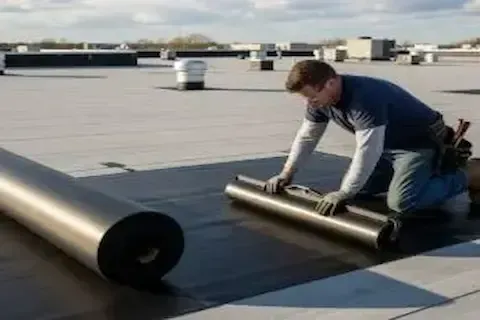
The membrane arrives at job sites in large sheets, often measuring 50 feet wide and up to 200 feet long, which minimizes the number of seams required across a roof surface. Fewer seams translate directly to reduced potential failure points and lower long-term maintenance requirements. Professional installers can cover substantial roof areas with single membrane pieces, creating continuous waterproof barriers that perform reliably for decades.
Installation methods vary based on building requirements and roof deck conditions. Fully adhered systems use specialized adhesives to bond the membrane directly to approved substrates, creating permanent attachment that resists wind uplift. Mechanically attached systems secure the membrane through fasteners and plates, offering easier future repairs and modifications. Ballasted systems rely on gravel or pavers to hold the membrane in place, providing the most economical installation option for suitable roof structures.
Climate Performance in Minnesota Conditions
Minnesota's extreme temperature variations test roofing materials beyond normal limits, with winter lows reaching -30°F and summer highs exceeding 90°F. EPDM rubber maintains its flexibility and waterproof properties across this entire temperature range, unlike many alternative materials that become brittle in cold conditions or soften excessively in heat.
The material's resistance to thermal cycling prevents the cracking and splitting that commonly affects other single-membrane systems. When temperatures drop rapidly during typical Minnesota weather patterns, EPDM Roofing contracts uniformly without creating stress concentrations at seams or penetrations. This thermal stability protects building interiors from water infiltration during freeze-thaw cycles that occur repeatedly throughout spring and fall seasons.
UV resistance ensures membrane integrity despite intense summer sun exposure. The carbon black formulation in EPDM provides natural UV protection that prevents degradation of the rubber compounds. This protection maintains membrane flexibility and waterproof performance for 20 to 30 years without requiring surface treatments or protective coatings that add cost and maintenance requirements.
Installation Requirements and Considerations
Proper substrate preparation determines long-term EPDM performance more than any other installation factor. The roof deck must provide smooth, stable surfaces free from irregularities that could puncture or stress the membrane. Insulation boards require secure attachment and smooth joints to prevent membrane damage during installation and service life.
Seam integrity represents the most critical aspect of EPDM installation quality. Professional installers use specialized tapes and adhesives designed specifically for EPDM bonding, creating seams that often exceed the strength of the base membrane material. Proper seam preparation includes thorough cleaning, precise alignment, and adequate pressure application during the bonding process.
Penetration details around HVAC equipment, vents, and other roof-mounted components require careful attention to prevent water infiltration. EPDM's flexibility allows for excellent conformability around complex shapes, but installation quality determines whether these details provide long-term weatherproofing. Experienced commercial roofing contractors in Coon Rapids understand the specific techniques required for reliable penetration sealing in Minnesota's climate conditions.
Quality control during installation includes comprehensive testing of all seams and details before system completion. Electronic leak detection equipment can identify potential problems before they become actual leaks, ensuring building owners receive fully functional roofing systems that protect their investments.
Maintenance and Longevity Factors
EPDM roofing requires minimal maintenance compared to other commercial roofing systems, but regular inspections help identify potential issues before they require emergency repairs. Semi-annual inspections focus on seam conditions, penetration details, and membrane surface integrity. These inspections typically require less than two hours for average-sized commercial buildings.
Cleaning requirements depend on local environmental conditions and building use patterns. Standard maintenance involves removing debris that could puncture the membrane and clearing drainage systems to prevent standing water. Power washing is generally not recommended, as high-pressure water streams can damage seams or create membrane lifting at edges.
Minor repairs can often be completed without replacing entire membrane sections. Small punctures or cuts respond well to patch repairs using compatible EPDM materials and adhesives. Seam repairs may require more extensive work but still cost significantly less than full roof replacement. Professional evaluation determines appropriate repair methods based on damage extent and location.
The expected service life of properly installed EPDM systems ranges from 20 to 30 years, with many installations exceeding these timeframes when maintained appropriately. This longevity provides excellent return on investment for commercial property owners who require predictable roofing costs over extended periods.
Common Installation Mistakes and Prevention
Inadequate substrate preparation causes more EPDM failures than any other installation error. Contractors who rush deck preparation or skip proper cleaning procedures create conditions for premature membrane failure. Proper preparation includes removing all debris, repairing deck irregularities, and ensuring adequate slope for drainage.
Seam failures often result from contamination during installation rather than inadequate materials or techniques. Dirt, moisture, or oils on membrane surfaces prevent proper adhesive bonding, creating weak points that fail under normal weather stresses. Professional installers maintain clean work areas and protect materials from contamination throughout the installation process.
Insufficient attachment or ballast allows wind uplift that can damage or remove membrane sections entirely. Minnesota's severe weather events generate significant uplift forces that exceed inadequately secured systems' resistance capabilities. Proper engineering calculations determine appropriate attachment patterns and ballast weights for local wind conditions.
Improper penetration details create immediate leak risks and long-term maintenance problems. These critical areas require specific techniques and materials that differ from standard seaming procedures. Experienced contractors understand these requirements and implement appropriate solutions for each penetration type.
Local Considerations for Anoka County Projects
Building codes in Anoka County address specific requirements for commercial roofing installations, including wind resistance ratings, insulation requirements, and drainage specifications. EPDM systems can meet these requirements when properly designed and installed by qualified contractors familiar with local regulations.
Snow load considerations affect both structural requirements and membrane selection for commercial buildings throughout the region. EPDM's flexibility prevents damage from snow and ice accumulation, but proper structural design ensures buildings can support typical winter loads without compromising roofing system integrity.
Local contractor availability influences project scheduling and cost considerations. TPO roofing for commercial buildings offers an alternative membrane option, but EPDM's proven track record in Minnesota conditions makes it the preferred choice for many commercial applications. Established contractors in Coon Rapids maintain relationships with material suppliers that ensure prompt delivery and competitive pricing for commercial projects.
Permit requirements vary by project scope and building type, but most commercial EPDM installations require building permits and inspections. Working with local contractors familiar with permitting processes helps ensure projects proceed smoothly without regulatory delays or complications.
Professional Installation Benefits
Professional EPDM installation provides warranties and guarantees that protect building owners' investments beyond material manufacturer coverage. Established commercial roofing contractors offer workmanship warranties that cover installation defects and ensure proper system performance throughout the warranty period.
Access to professional-grade materials and tools ensures installation quality that exceeds what property owners can achieve through other approaches. Commercial-grade EPDM membranes, adhesives, and accessories require specific storage and handling procedures that professional contractors understand and implement consistently.
Project management capabilities allow professional contractors to coordinate installations around building operations, minimizing disruption to tenants and business activities. This coordination includes scheduling deliveries, managing waste disposal, and implementing safety procedures that protect building occupants and contractor personnel.
Insurance coverage protects building owners from liability risks associated with roofing work, including property damage and worker injuries. Professional contractors maintain appropriate insurance levels and safety training that reduce risks for all project participants.
Long-Term Value Considerations
EPDM roofing provides predictable long-term costs that help building owners budget effectively for property maintenance. The system's proven durability reduces unexpected repair expenses and emergency replacement costs that can disrupt business operations and strain budgets.
Energy efficiency benefits vary with installation method and insulation levels, but properly designed EPDM systems contribute to overall building performance. White EPDM formulations offer enhanced reflectivity for buildings where cooling costs represent significant operating expenses, though black membranes remain more common for their proven durability.
Resale value considerations favor proven roofing systems with documented performance records. EPDM's established track record and widespread acceptance among commercial property professionals support property values better than newer systems with limited performance history.
The combination of low maintenance requirements, extended service life, and reliable performance makes EPDM roofing an excellent investment for commercial properties throughout Anoka County. Property owners who prioritize long-term value over initial cost savings typically choose EPDM systems for their reliability and proven performance in Minnesota's challenging climate conditions.
