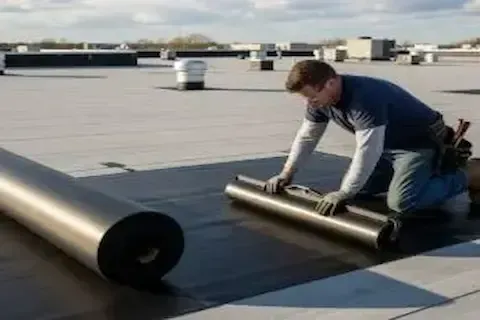
EPDM Rubber Membrane Benefits for Coon Rapids Buildings
Flat and low-slope commercial buildings in Coon Rapids face a specific set of roofing challenges. Minnesota winters push temperatures well below zero, spring brings heavy snowmelt and standing water, and summer UV exposure can degrade roofing materials faster than owners expect. EPDM rubber membrane has been a trusted answer to these conditions for decades, and its popularity among commercial property owners along Highway 10 and throughout Anoka County is no accident. Understanding what makes this material perform so well — and where it genuinely excels — helps you make a smarter decision when it is time to replace or install a flat roof.
What EPDM Rubber Membrane Actually Is
EPDM stands for ethylene propylene diene monomer, a synthetic rubber compound manufactured in large sheets ranging from 45 to 90 mils in thickness. The material is derived from natural gas and oil byproducts and is vulcanized during production, which gives it a dense, cross-linked molecular structure. That structure is the source of most of its performance advantages. Unlike multi-layer built-up roofing or some thermoplastic membranes, EPDM is a single-ply material that goes down in broad sheets, reducing the number of seams on any given roof.
For commercial roofing projects in Coon Rapids, EPDM is typically available in black or white. Black absorbs heat and performs well in colder climates where passive solar gain during winter reduces heating loads. White or light-coated versions reflect more solar radiation, which can lower cooling costs during the warmer months. Your contractor can help you weigh which option makes sense based on your building's mechanical systems and orientation.
Cold-Weather Flexibility Is a Core Advantage
One of the most important material properties for any Minnesota roof is how it behaves in extreme cold. Thermoplastic roofing materials can become brittle at low temperatures, making them vulnerable to cracking when foot traffic occurs during winter maintenance or when thermal contraction creates stress at seams and penetrations. EPDM remains flexible down to approximately -40 degrees Fahrenheit, which means it moves with the building rather than fighting it.
Commercial buildings in Coon Rapids experience significant thermal cycling throughout the year. A roof membrane that cannot accommodate that movement will develop stress cracks over time, leading to leaks at the worst possible moment. EPDM's elastomeric properties allow it to stretch and recover without permanent deformation, which is why you will find it on industrial facilities, retail centers, and office buildings throughout the region that have carried the same membrane for 25 to 30 years without major failure.
Resistance to UV, Ozone, and Weather Exposure
Ozone degradation is a real concern for rubber-based products, but EPDM is specifically formulated to resist ozone attack. The ethylene propylene backbone of the polymer does not contain double bonds that ozone can break down, which is a significant structural difference from natural rubber. This means a properly installed EPDM roof in Coon Rapids will not crack, chalk, or dry out on the surface the way older rubber compounds do over time.
UV resistance follows a similar pattern. Black EPDM in particular holds up exceptionally well under continuous sun exposure. Some building owners who chose coated or white membranes find that periodic recoating is needed to maintain reflectivity, but the base EPDM membrane beneath remains structurally sound regardless. This durability matters for flat roofs with full southern exposure, a common configuration on the strip retail and warehouse buildings found throughout the Anoka County commercial corridor.
Seam and Repair Options Make Maintenance Practical
Every roofing membrane has seams, and every seam is a potential vulnerability. EPDM seams are sealed using either lap adhesive or seam tape, and when installed correctly they create a bond that is at least as strong as the membrane itself. More importantly for building owners, seam repair on an aging EPDM roof is straightforward and does not require specialized equipment. A trained roofing crew can clean, prime, and re-tape a failing seam in a fraction of the time it takes to address failed seams on modified bitumen or built-up systems.
Punctures and small tears from mechanical equipment, hail, or foot traffic can be patched using EPDM patch kits that bond directly to the existing membrane. This repairability extends the useful life of a roof significantly. Rather than replacing an entire field of membrane because of isolated damage, a skilled EPDM Roofing contractor can address problem areas directly and restore waterproof integrity without a full tear-off. For property managers in Coon Rapids overseeing multi-building portfolios, that flexibility has real operational and budget value.
Installation Methods and Their Trade-offs
EPDM can be installed in three primary ways: fully adhered, mechanically fastened, or ballasted. Each has a place depending on building type, structural capacity, and budget.
- Fully adhered systems bond the membrane directly to the roof deck using contact adhesive, creating a tight, wind-resistant installation that is ideal for buildings with complex penetrations or parapet walls.
- Mechanically fastened systems use fasteners through the insulation into the deck, which speeds installation and lowers labor costs but can allow some membrane movement in high winds if not properly designed.
- Ballasted systems hold the membrane down with smooth river rock or pavers and require no adhesive. They are fast to install and easy to re-access, but they add significant weight that not every roof structure can support.
In the Coon Rapids area, fully adhered systems are common on occupied commercial buildings where wind uplift resistance is a priority and where the installation needs to accommodate existing HVAC curbs, drains, and pipe penetrations. Your roofing contractor should assess the deck condition and structural capacity before recommending an installation method.
Long Service Life and Total Cost of Ownership
When you evaluate roofing systems on a cost-per-year basis rather than upfront price alone, EPDM consistently performs well. A properly installed 60-mil EPDM membrane on a commercial building in the Anoka area can last 25 to 30 years with routine maintenance. That maintenance typically involves annual inspections, keeping drains clear, and addressing any seam or flashing issues before they become leaks.
Compared to modified bitumen systems that may require recoating every five to seven years or built-up roofing that can develop alligatoring on the surface coating, EPDM demands less frequent intervention. That lower maintenance burden translates directly into lower lifecycle costs. For a detailed look at the broader context of this roofing system before committing to installation, reviewing an EPDM rubber roofing overview can help frame the full decision.
Why It Works Well for Coon Rapids Commercial Properties
The combination of cold-weather flexibility, UV and ozone resistance, repairability, and long service life makes EPDM a practical match for commercial buildings in Coon Rapids. The climate demands a membrane that can handle freeze-thaw cycling without brittleness, and the operating environment of most Anoka County commercial properties demands a system that can be maintained and repaired without shutting down operations. EPDM satisfies both requirements, which is why it remains one of the most widely specified flat roofing systems in this region and continues to be installed on new construction and reroofing projects across the Twin Cities metro.
