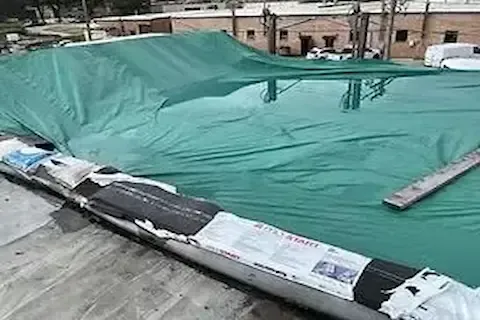
Hail Damage Claims for Coon Rapids Commercial Buildings
When a hailstorm moves through Anoka County, commercial property owners in Coon Rapids face a challenge that goes well beyond patching a roof. The real work begins with documentation — and the standard your insurance carrier expects is far higher than most building owners anticipate. Flat and low-slope commercial roofs absorb hail impact differently than residential shingles, and the evidence required to support a successful claim reflects that complexity. Understanding how to build a credible, inspection-ready damage file before an adjuster ever sets foot on your property can be the difference between a full replacement approval and a denied or underpaid claim.
Why Commercial Hail Claims Differ From Residential
Residential hail claims are familiar territory for most homeowners — round impact marks on asphalt shingles are visible from the ground and easy for adjusters to identify. Commercial flat roofs are a different story. TPO membranes, EPDM, modified bitumen, and built-up roofing systems each respond to hail impact in ways that are not immediately obvious to the untrained eye. A hailstone that would leave a clear dent on a shingle may leave only a slight surface fracture or granule displacement on a commercial membrane — damage that is just as serious structurally but far harder to photograph and document.
Anoka County insurance carriers have seen enough inflated or underprepared commercial claims that their adjusters arrive with specific protocols. They will look for consistent impact patterns across multiple roof sections, they will measure hail spatter density, and they will compare the storm date against verified weather data for the Coon Rapids area. Your documentation needs to anticipate all of this before the inspection begins.
Starting With Verified Storm Data
Before you photograph a single square foot of your roof, pull verified hail size and storm path data for the date in question. Resources like the National Weather Service storm reports and third-party weather forensic services can produce a certified report showing the hail size that passed over your specific Coon Rapids address. This data becomes an anchor for your entire claim. Without it, an adjuster can argue that the damage you are pointing to predates the storm or came from a different event entirely.
Keep a physical copy and a digital backup of this report. Attach it to every version of your claim file and reference it explicitly when you submit documentation to your carrier.
Photographing Flat Roof Damage Correctly
Photography is where most commercial hail claims succeed or fail. The goal is to create a visual record that proves both the presence of impact damage and the density of that damage across your roof surface. A few scattered photos will not accomplish this. You need a systematic grid-based approach.
- Divide the roof into sections — typically 10x10 foot test squares — and photograph each section from directly above at a consistent distance.
- Use a measurement reference in every close-up photo, such as a ruler or a standard chalk line, so the adjuster can gauge impact diameter without guessing.
- Photograph roof accessories separately — HVAC curbs, vent caps, pipe boots, metal flashing, and parapet cap metal all show hail impacts more clearly than membrane surfaces and are often the most persuasive evidence in a commercial claim.
- Capture water intrusion evidence — interior ceiling staining, wet insulation boards, and moisture readings from a roof moisture scanner all connect the exterior damage to functional harm inside the building.
- Timestamp every photo with metadata intact and document the name of the person who took each image and their credentials.
Metal surfaces on your roof are particularly important. Aluminum coping, steel drain pans, and HVAC equipment housings show clear, measurable hail spatter that adjusters treat as a reliable impact record. If these surfaces show consistent impact marks matching the verified storm data for Coon Rapids, that correlation is difficult for a carrier to dismiss.
Measuring and Recording Impact Density
Insurance carriers use impact density — the number of hits per 10-square-foot test area — as a key metric for determining whether damage meets the threshold for a full replacement versus a spot repair. The standard varies by carrier and policy, but most commercial policies require a certain density of functional damage rather than just cosmetic impact.
For Storm Damage Roof Repair assessments on commercial flat roofs, a qualified roofing contractor will systematically core test sections of the roof to check whether hail impact has compromised the insulation layer beneath the membrane. Even when the membrane surface looks intact, compacted insulation from hail impact reduces the roof's thermal value and can create long-term moisture pathways. Core sample results, documented with photos and written measurements, belong in your claim file.
Working With Your Adjuster in Anoka County
Anoka County commercial property adjusters are experienced with the hail frequency this part of Minnesota sees, particularly during late spring and summer convective storm seasons. That experience cuts both ways. A well-prepared claim file signals to the adjuster that you have worked with professionals who understand the documentation standard, which tends to result in a more efficient review process. A thin or disorganized file invites scrutiny and delays.
Request a joint inspection rather than allowing the adjuster to inspect alone. Having a qualified roofing contractor present during the adjuster's walkthrough means that disputed findings can be addressed on the spot, measurements can be verified, and the adjuster cannot simply note items as inconclusive without a professional response. This is standard practice for commercial claims and any Coon Rapids carrier should accommodate it.
You should also review your policy language for the replacement cost value versus actual cash value distinction before the inspection. Many commercial building owners in Coon Rapids carry ACV policies without realizing it, which means the payout is reduced by depreciation. If your policy includes a recoverable depreciation provision, understanding how to trigger that recovery is part of maximizing your claim outcome.
Common Documentation Mistakes That Reduce Payouts
The most frequent errors in commercial hail claims are preventable with preparation. Waiting too long to document is the most damaging — every rain event, foot traffic crossing, and maintenance activity after the storm degrades the evidence. Hail spatter on soft metal surfaces can weather and fade within weeks in Minnesota's climate.
Submitting only membrane photographs without documenting accessories, drains, and penetrations leaves the strongest evidence off the table. Failing to connect interior damage to the exterior event leaves the claim open to challenge. And presenting documentation without a clearly dated storm data report gives the adjuster room to question the timeline.
For context on the full scope of what a professional assessment covers after a major storm, reading about storm damage roof repair help can clarify the sequence of steps from initial inspection through completed repairs.
The Professional Assessment Advantage
A commercial roofing contractor with hail claim experience brings more than repair capability to the process. They understand the documentation language carriers use, the density thresholds that trigger full replacement approvals, and the specific roof systems common to commercial buildings throughout Coon Rapids and the broader Anoka County market. Their written assessment, when formatted to align with adjuster expectations, becomes a direct rebuttal to any attempt to minimize scope or reduce the payout.
Starting the process with the right professional partner — before the adjuster schedules their visit — gives you the strongest possible position going into the review. In a hail-active market like Coon Rapids, that preparation is not a luxury. It is the foundation of every successful commercial claim.
