Storm Damage Roof Repair for Coon Rapids Properties
Understanding Storm Damage on Commercial Roofs
Commercial properties in Coon Rapids face significant weather challenges throughout the year, with severe storms posing the greatest threat to roofing systems. Storm damage manifests in various forms, from obvious punctures and tears to subtle membrane compromises that may not become apparent until weeks after the initial weather event. Understanding these damage patterns helps property managers and business owners respond appropriately to protect their investments.
Hail damage represents one of the most common storm-related roofing issues in the Twin Cities metro area. Hailstones create impact craters on membrane surfaces, compress insulation layers, and can puncture through multiple roofing components. The size and velocity of hailstones determine the severity of damage, with stones larger than one inch typically causing immediate penetration through single-ply membranes and built-up roofing systems.
Wind damage occurs through multiple mechanisms, including direct uplift forces, debris impact, and membrane fatigue from sustained buffeting. High winds exploit existing weaknesses in roofing systems, particularly around penetrations, edges, and seams. Understanding these failure patterns enables more effective emergency response and long-term repair strategies.
Water infiltration following storm events can cause extensive secondary damage to building interiors, insulation systems, and structural components. Immediate response to prevent water entry becomes critical for minimizing overall repair costs and business disruption.
Immediate Post-Storm Assessment Procedures
The first 24 hours following a severe weather event are crucial for documenting damage and preventing additional deterioration. Property managers should conduct initial visual inspections from ground level, looking for obvious signs of damage such as debris accumulation, standing water, or visible membrane tears. However, detailed roof inspection should only be performed by qualified professionals due to safety concerns and the potential for hidden damage.
Professional storm damage assessment begins with a comprehensive exterior evaluation using proper safety equipment and documentation procedures. Experienced contractors examine membrane surfaces for impact damage, check flashings and penetrations for displacement, and assess drainage systems for blockages or damage. This initial assessment determines the scope of immediate temporary repairs needed to prevent further water infiltration.
Interior inspection complements exterior assessment by identifying water intrusion points and evaluating the extent of secondary damage. Water stains on ceilings, wet insulation, and compromised structural elements provide crucial information for developing comprehensive repair strategies. Moisture detection equipment helps identify areas of concern that may not be immediately visible.
Documentation during the assessment phase proves essential for insurance claims and repair planning. High-resolution photographs, detailed written reports, and accurate measurements create the foundation for successful insurance negotiations and contractor selection. Proper documentation also establishes a baseline for monitoring ongoing conditions during the repair process.
Emergency Protection and Temporary Repairs
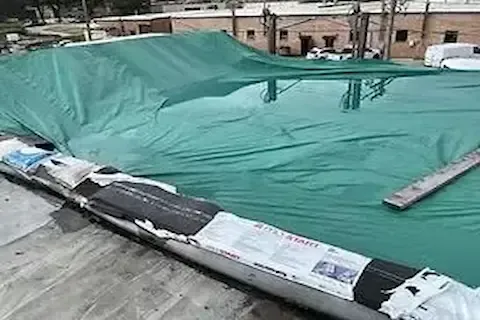
Emergency tarping represents the most common immediate response to storm-damaged commercial roofs. Professional-grade tarps, properly secured with appropriate fastening systems, provide temporary weather protection while permanent repairs are planned and executed. The quality of temporary protection directly impacts the success of subsequent repair work and the prevention of additional damage.
Effective tarping requires understanding of wind loads, drainage patterns, and membrane compatibility. Tarps must be sized appropriately for the damaged area with sufficient overlap to ensure water-tight coverage. Fastening systems should penetrate sound roofing material rather than compromised areas, and all penetrations should be properly sealed to prevent new leak points.
Water removal becomes critical when storms cause ponding or interior infiltration. Commercial-grade extraction equipment removes standing water from roof surfaces and building interiors. Rapid water removal prevents additional damage to insulation systems and helps maintain healthy indoor air quality during the repair period. Storm Damage Roof Repair services include comprehensive water removal and dehumidification to address immediate concerns.
Debris removal requires careful attention to avoid causing additional damage during cleanup efforts. Sharp objects, tree branches, and other storm debris should be removed by hand rather than swept or pushed across membrane surfaces. Areas around debris impact points require detailed inspection for hidden damage that may not be immediately apparent.
Insurance Documentation and Claims Process
Successful insurance claims for storm damage depend heavily on thorough documentation and professional presentation of damage evidence. Insurance adjusters evaluate claims based on clear evidence of storm-related damage, proper documentation of pre-existing conditions, and reasonable repair cost estimates from qualified contractors.
Weather documentation supports insurance claims by establishing the timing and severity of storm events. National Weather Service reports, local meteorological data, and news coverage of storm events provide objective evidence of conditions that could cause roofing damage. This documentation becomes particularly important when claims are filed weeks or months after storm events.
Professional damage assessment reports carry significant weight in insurance negotiations. Qualified roofing contractors provide detailed reports that identify storm-related damage, distinguish it from normal wear and deterioration, and recommend appropriate repair strategies. These reports should include photographic evidence, technical explanations of damage mechanisms, and detailed cost estimates for recommended repairs.
Repair specifications developed for insurance purposes must balance comprehensive coverage with cost-effectiveness. Over-specification can lead to claim disputes, while under-specification may result in inadequate repairs that fail prematurely. Experienced contractors understand insurance requirements and develop specifications that meet both technical and financial criteria for successful claims resolution.
Comprehensive Repair Strategies
Permanent storm damage repairs require careful evaluation of existing roofing systems and integration of new materials with surviving components. Single-ply membrane repairs involve precise cutting and seaming techniques to ensure watertight connections between new and existing materials. The quality of these connections determines the long-term performance of the entire roofing system.
Built-up roofing repairs present unique challenges due to the multi-layer construction of these systems. Storm damage often affects multiple layers, requiring selective replacement of damaged components while preserving sound materials. Proper adhesion between new and existing layers requires careful surface preparation and appropriate material selection based on compatibility requirements.
Modified bitumen systems damaged by storms typically require heat-welded repairs to maintain system integrity. modified bitumen roof systems offer excellent durability when properly repaired, but require specialized equipment and techniques to achieve reliable seam connections. The thermal properties of these materials make timing and weather conditions critical factors in repair success.
Insulation replacement often accompanies membrane repairs when storm damage allows water infiltration into roofing systems. Wet insulation loses thermal performance and can harbor mold growth, making replacement necessary for both performance and health reasons. New insulation installation must account for drainage patterns and vapor barriers to prevent future moisture problems.
Specialized Considerations for Anoka County Properties
Commercial properties in Coon Rapids face unique weather patterns that influence storm damage repair strategies. The area's location in the upper Midwest creates exposure to severe thunderstorms, large hail events, and damaging winter storms. Understanding these regional weather patterns helps property owners prepare for common damage scenarios and select appropriate repair materials.
Local building codes and permit requirements affect storm damage repair projects, particularly for extensive damage that requires significant roofing system replacement. Anoka County building departments may require permits for major repairs, and local inspectors ensure compliance with current building standards. Working with contractors familiar with local requirements streamlines the approval process.
Seasonal considerations impact repair scheduling and material selection in the Twin Cities area. Summer storm damage often occurs during peak construction season, potentially affecting contractor availability and material pricing. Winter repairs face temperature limitations that restrict certain roofing materials and installation techniques, requiring specialized cold-weather procedures.
Regional material suppliers and contractor networks provide advantages for storm damage repairs in Coon Rapids. Local suppliers understand regional weather challenges and stock appropriate materials for common damage scenarios. Established contractor relationships with local suppliers often result in faster material delivery and better pricing for property owners facing storm damage repairs.
Prevention and Preparedness Strategies
Proactive maintenance programs significantly reduce the severity of storm damage on commercial roofing systems. Regular inspections identify potential weaknesses before storms exploit them, and preventive repairs address minor issues before they become major problems. Well-maintained roofing systems better withstand severe weather and require less extensive repairs following storm events.
Emergency preparedness planning helps property managers respond effectively to storm damage situations. Developing relationships with qualified roofing contractors before emergencies occur ensures rapid response when damage occurs. Emergency contact lists, insurance policy information, and building documentation should be readily accessible during crisis situations.
Material selection for roof replacement projects should consider regional weather patterns and common damage mechanisms. Impact-resistant materials, enhanced fastening systems, and improved drainage designs help commercial roofing systems better withstand severe weather events. These investments in resilient design often pay for themselves through reduced maintenance and insurance costs.
Documentation systems for ongoing roof maintenance create valuable records for insurance purposes and help track the condition of roofing systems over time. Regular photographic documentation, maintenance logs, and repair records establish the maintenance history that insurance adjusters consider when evaluating storm damage claims.
Long-term Performance and Warranty Considerations
Storm damage repairs must integrate seamlessly with existing roofing systems to provide reliable long-term performance. Material compatibility, installation quality, and system design all contribute to the success of repair work. Poorly executed repairs can create new leak points and reduce the overall performance of roofing systems.
Warranty coverage for storm damage repairs varies based on the extent of work performed and the materials used. Comprehensive repairs may qualify for full system warranties, while localized repairs typically receive limited warranties covering only the specific work performed. Understanding warranty terms helps property owners make informed decisions about repair strategies and contractor selection.
Quality control during repair work ensures that new installations meet manufacturer specifications and industry standards. Professional contractors implement inspection procedures at each phase of repair work, from substrate preparation through final membrane installation. These quality measures directly impact the longevity and performance of completed repairs.
Performance monitoring following storm damage repairs helps identify potential issues before they become major problems. Regular inspections of repaired areas, attention to drainage patterns, and prompt response to minor maintenance needs extend the life of repair work and maintain overall system performance.
