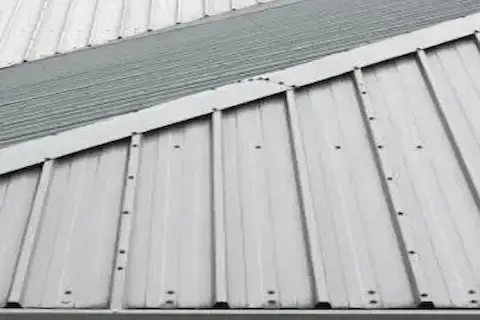
Metal Roof Snow Retention for Coon Rapids Businesses
Minnesota winters hit Anoka County hard, and commercial buildings with metal roofs face a specific hazard that flat-roof owners rarely think about: sudden avalanche-style snow slides. When accumulated snow releases all at once from a sloped metal surface, it can injure pedestrians, damage vehicles in parking lots, crush entryway canopies, and create serious liability exposure for property owners. Snow retention systems are the engineered solution, and for Coon Rapids businesses, they are worth understanding before the next accumulation season arrives.
Why Metal Roofs Create a Unique Snow Hazard
Metal roofing panels — especially standing seam profiles — are designed to shed water efficiently. That same smooth, low-friction surface that performs so well in rain and ice melt also allows snow to build up as a slab and then release suddenly when temperatures shift. Traditional asphalt shingles grip snow differently because of their textured surface. On metal, a temperature change of just a few degrees can send hundreds of pounds of snow sliding off a roof edge in seconds.
In Coon Rapids, commercial properties along Highway 10, Foley Boulevard, and the Riverdale retail corridor often have entry canopies, drive-through lanes, employee walkways, and customer parking positioned directly beneath roof eaves. Any of those areas becomes a danger zone without proper snow retention hardware in place. The hazard is not theoretical — it is a documented cause of injury claims and property damage throughout the Upper Midwest every winter.
How Snow Retention Systems Work
Snow guards and snow retention systems work by holding accumulated snow in place on the roof surface long enough for it to melt and drain gradually rather than sliding off as a mass. There are two primary categories used on commercial metal roofs:
- Pad-style snow guards: Individual brackets or pads attached at intervals across the roof field. They create friction points that interrupt a sliding snow mass and break it into smaller sections. These are commonly used on lower-pitch roofs or in areas where load calculations allow for distributed attachment points.
- Bar or rail systems: Continuous horizontal bars or pipe rails anchored across the roof and running parallel to the eave. These systems hold snow in a continuous line and are better suited to steeper pitches or roofs with high annual snowfall exposure. They also distribute load across more attachment points, which matters on some panel profiles.
The right choice depends on roof pitch, panel type, expected snow load for your specific location in Anoka County, and where pedestrian traffic or property assets are positioned below the eaves.
Attachment Methods and Panel Compatibility
One of the most important technical considerations with snow retention is how the hardware attaches to the roof. On standing seam panels, clamp-based attachments that grip the raised seam are preferred because they avoid penetrating the panel face. Penetration-based attachments require sealants and create potential leak points — something no commercial property owner wants to introduce on a system designed for long-term weather resistance.
For exposed fastener metal panels, attachment options are more limited and require careful sealing. Your installer needs to match the retention hardware to the specific panel system you have in place. Mismatched hardware — either by load rating or attachment style — can fail under heavy snow conditions, which is worse than having no system at all because it creates a false sense of security.
If your Coon Rapids commercial property uses a Metal Roofing Systems approach with standing seam panels, clamp-attached rail systems typically provide the cleanest installation with no roof penetrations and a manufacturer-backed attachment warranty.
Placement Strategy for Commercial Properties
Snow guards placed randomly across a roof surface provide inconsistent protection. Proper placement starts with identifying the priority zones below the roof — building entrances, fire exits, drive-through lanes, accessible parking spaces required under ADA compliance, and any outdoor equipment like HVAC condensers or utility meters. Those areas define where snow retention must perform reliably.
From there, retention hardware is positioned in rows above those zones, typically within the lower third of the roof field. On roofs with valleys or dormers, additional placement around those features prevents channeled snow from building up and releasing unexpectedly. A thorough site review in the warmer months — before snow season — gives you time to plan and install correctly rather than reacting after an incident.
Coon Rapids commercial properties also benefit from reviewing local building codes with Anoka County as part of any roofing upgrade. Snow load requirements for this region are codified in Minnesota State Building Code, and any retention system should be installed in compliance with those specifications.
Maintenance and Inspection Considerations
Snow retention hardware is not entirely maintenance-free. Clamp-based systems on standing seam roofs need periodic inspection to verify that clamp fasteners remain at proper torque — thermal cycling through Minnesota's freeze-thaw seasons can gradually affect hardware tension. Pad-style systems should be checked for adhesion integrity if any adhesive components were used in installation.
After major ice storm events, which Coon Rapids sees regularly through late November into March, it is worth having a qualified roofer walk the roof to check that no retention components shifted under unusual load conditions. Catching a loose or displaced guard before the next snow event costs far less than dealing with an incident below the eave.
You can also read more about the broader context of metal roofing system install decisions for commercial properties, which covers panel selection and system design considerations that directly affect how snow retention hardware is specified and installed.
Planning Ahead for the Coon Rapids Winter Season
The window for installing snow retention systems comfortably closes once consistent freezing temperatures arrive. Working on metal roofs in sub-zero conditions is hazardous for crews and harder on materials. For Coon Rapids commercial building owners, late summer through early October represents the ideal time to assess your current metal roof, identify eave zones that need protection, and schedule installation before the first significant snowfall.
If your property already experienced a snow slide incident — or a near miss — last winter, this coming off-season is the time to act. Snow retention is a relatively modest investment compared to the liability exposure and property damage a single uncontrolled slide can cause on a busy commercial site in Anoka County.
