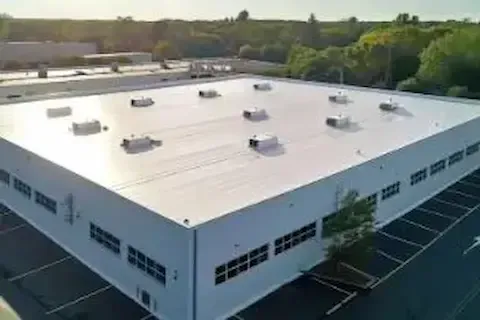
Replacement Cost Factors for Coon Rapids Flat Roofs
Flat roof replacement on a commercial building in Coon Rapids is rarely a fixed-price transaction. The final number on a proposal reflects dozens of variables that stack on top of one another, from the age of your existing deck to the number of rooftop units your HVAC contractor installed since the last reroof. Understanding those variables before you request bids puts you in a stronger position to evaluate proposals accurately, compare contractors fairly, and avoid sticker shock when estimates arrive with line items you did not expect.
Deck Condition and What Lies Beneath the Membrane
The structural deck is the foundation of any flat roofing system, and its condition is the single largest wildcard in a replacement budget. Many commercial buildings along the Highway 10 corridor and throughout the Coon Rapids business parks were constructed with steel or wood plank decking that has absorbed decades of moisture intrusion. When a contractor tears off the old membrane, deteriorated or rotted decking must be replaced before anything new goes down. That work is billed separately from the base membrane contract, often at a per-square or per-sheet rate, and it cannot be fully estimated until tear-off begins. Requesting a written allowance clause in your contract — rather than a simple exclusion — ensures that pricing is transparent when deck repairs become necessary.
Existing Insulation Depth and Energy Code Compliance
Minnesota's energy code has been updated several times in recent decades, and many older Coon Rapids commercial properties were insulated to standards that no longer meet current requirements. When a full replacement is triggered, the new assembly typically must comply with current code, which means adding polyisocyanurate or other rigid board insulation to reach the required R-value. The gap between what you have and what code requires translates directly into material cost. A building with two inches of aged, compressed insulation may need three or more additional inches of new board, multiplying both material expense and the height differential at all roof penetrations, curbs, and flashings. This is a cost driver that is frequently overlooked in early-stage budget conversations.
Membrane Type and Its Effect on Price Per Square
TPO, EPDM, and modified bitumen are the three systems most commonly specified for commercial flat roofs in the Coon Rapids and broader Anoka County market. Each carries a different installed cost per square foot, and each has performance characteristics that may favor certain building types over others. TPO is generally the most cost-competitive at installation and offers strong UV reflectance, making it well suited for buildings with cooling loads. EPDM tends to be more flexible in extreme cold, which is a relevant consideration for any roof that must perform through Minnesota winters without cracking. Modified bitumen systems, often installed as two-ply assemblies, offer excellent puncture resistance and can be advantageous for roofs with heavy foot traffic from maintenance personnel. The gap between the least and most expensive system can reach several dollars per square foot, so your membrane selection has a meaningful effect on the final number. For a detailed walkthrough of how the full Commercial Roof Replacement process is structured, that resource walks through each phase from initial assessment through final inspection.
Roof Size, Configuration, and Penetration Count
Total square footage is the most obvious cost driver, but configuration matters as much as raw area. A clean 20,000-square-foot warehouse roof with minimal penetrations is far less labor-intensive than a 10,000-square-foot roof broken into multiple levels, with a dense cluster of HVAC curbs, pipe penetrations, drains, and skylights. Each penetration requires custom flashing work, which is both time-consuming and material-intensive. Rooftop equipment from industrial tenants along Coon Rapids' commercial corridors often means more curbs per square foot than a simple retail box, and that density drives labor hours significantly. During the bidding phase, ask contractors to break out penetration flashing costs as a separate line item so you can verify that all existing penetrations were counted accurately.
Rooftop Access and Site Logistics
How easily a crew and their equipment can reach your roof affects both labor cost and project duration. Buildings along busier sections of Coon Rapids near Riverdale or the thoroughfares feeding into Anoka may have limited staging area for crane operations, dumpster placement, or material delivery. When access is constrained, additional rigging time, smaller load lifts, or manual relay of materials adds hours to the job. If your building shares a parking lot with neighboring tenants or if street access requires a permit for staging equipment, those logistics need to be addressed before bidding rather than treated as a change order after the contract is signed.
Tear-Off Volume and Disposal Costs
A single-ply system being replaced after 20 years carries a different tear-off cost than a built-up roof with four or five plies of gravel-surfaced felt that has been topped with multiple repair layers over the decades. Tear-off labor is typically priced per square, but heavier assemblies take longer and produce more waste. Disposal fees in the Anoka County area are based on weight and material type, and gravel-ballasted or multi-ply systems can generate substantially more tonnage per square than a simple single-ply tear-off. If you have any records of previous roofing work, sharing them with bidding contractors helps them estimate tear-off volume more accurately and reduces the likelihood of a scope dispute mid-project.
Warranty Terms and Their Influence on System Selection
Manufacturer warranties for commercial flat roofing systems typically range from 10 to 30 years, and the warranty tier you select influences both material specification and contractor qualification requirements. A 20-year no-dollar-limit warranty will require a thicker membrane, specific insulation board products, and a certified installer — all of which carry premium pricing over a basic 10-year coverage tier. For a Coon Rapids property owner planning a long hold, the extended warranty may represent strong value. For an owner approaching a sale or with a shorter investment horizon, a mid-tier warranty may align better with the building's economic life. This tradeoff is worth modeling explicitly before you commit to a system specification. Understanding the full commercial roof replacement process in advance helps you ask the right warranty questions during contractor interviews.
Seasonal Timing and Its Effect on Pricing and Scheduling
Commercial roofing in Minnesota is a compressed-season business. Contractors working the Coon Rapids and Anoka County market face weather-driven scheduling pressure from roughly October through April, and their most productive installation windows run May through September. Projects bid and scheduled during the peak season may carry higher pricing due to labor demand, while projects planned for shoulder seasons — late spring or early fall — sometimes offer more competitive pricing and greater scheduling flexibility. That said, cold-temperature adhesive limitations and membrane handling requirements mean that certain systems cannot be installed outside a temperature window without technical workarounds that add cost of their own.
Putting the Full Picture Together
No two flat roof replacements in Coon Rapids will carry identical cost drivers, because no two buildings present the same combination of deck age, insulation depth, penetration density, access conditions, and system history. The most effective way to manage replacement cost is to understand each variable before bids arrive, ask contractors to price them as explicit line items, and treat the base membrane cost as only one part of a larger budget. When you approach the process with that level of detail, you are far better positioned to evaluate proposals on their actual scope rather than their headline number.
