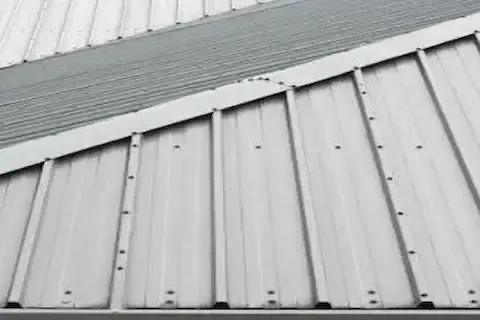
Standing Seam Metal Roofs for Coon Rapids Buildings
When a Coon Rapids warehouse, manufacturing facility, or office complex needs a roof that will hold up through decades of Minnesota winters, standing seam metal is consistently one of the most specified systems available. Unlike exposed-fastener panels, standing seam metal roofing uses concealed clips and raised seams to join panels, eliminating the penetration points where water infiltration and fastener pullout typically begin. For Anoka County building owners dealing with heavy snow loads, freeze-thaw cycling, and the occasional severe storm, that structural difference matters more than it might in a milder climate.
What Makes Standing Seam Different from Other Metal Panels
Most people who haven't specified commercial roofing assume all metal roofs work the same way. The distinction between exposed-fastener and standing seam systems is significant enough to change both the long-term performance profile and the maintenance requirements of your building.
With exposed-fastener metal panels, screws driven through the face of the panel secure it directly to the structure. Every screw penetrates the weather barrier, and every screw relies on a rubber washer to remain watertight. Over years of thermal expansion and contraction, those washers degrade. In Minnesota, where temperature swings between January lows and July highs can exceed 100 degrees Fahrenheit, that movement stress is substantial.
Standing seam systems attach through concealed clips that allow the panels to float independently as temperatures change. The raised seams — typically one and a half to two inches tall — interlock or snap together along the panel edges, keeping all fasteners out of the weather plane entirely. The result is a roof that can accommodate thermal movement without working fasteners loose or stressing the panel surface.
Panel Profiles and Seam Types Used on Coon Rapids Commercial Buildings
Standing seam panels come in several profile options, and the right choice depends on roof slope, span length, and the type of structural deck underneath. The two most commonly specified seam styles for commercial applications in the Coon Rapids area are snap-lock and mechanically seamed profiles.
Snap-lock panels are factory-formed with a male and female leg that lock together on the job site without mechanical seaming equipment. They're faster to install and well suited to roofs with adequate slope for positive drainage. Mechanically seamed panels are field-crimped with a seaming machine that folds the panel legs together after installation. This seam style is typically used on low-slope commercial roofs where a more aggressive watertight connection is needed to handle standing water during heavy rainfall or rapid snowmelt.
For large-footprint buildings common in Coon Rapids industrial corridors — distribution centers, cold storage facilities, manufacturing plants — long-span panels reduce the number of seams across the field of the roof, which lowers both installation time and the number of potential leak points over the building's service life.
Snow Load Engineering and Minnesota Code Compliance
Anoka County falls within a ground snow load zone that requires commercial roofs to be engineered for significant accumulated weight. Standing seam metal performs well under these conditions for two reasons. First, the panel and clip system can be engineered to specific loading requirements without modification to the panel profile itself. Second, the smooth metal surface sheds snow more efficiently than membrane or shingle systems, reducing the duration of peak load events on the structure below.
That said, snow retention is a legitimate design consideration for Coon Rapids commercial properties located near pedestrian entrances, loading docks, or lower adjacent rooflines. Snow guards or retention bars can be clamped directly to the standing seam without penetrating the panel, preserving the watertight integrity of the system while controlling where snow slides off the roof.
All standing seam installations should be reviewed against current Minnesota State Building Code requirements and Anoka County permit standards, including wind uplift calculations, thermal performance requirements, and drainage design for the specific building geometry.
Substrate and Decking Compatibility
Standing seam metal panels can be installed over structural steel purlins, rigid insulation above a steel deck, or wood decking on older commercial structures. The clip attachment method and clip spacing are engineered to match the specific substrate, so getting the structural details right during the design phase is essential before panels are ordered.
For re-roofing projects — a common application on Coon Rapids commercial and industrial buildings originally built in the 1980s and 1990s — standing seam can often be installed over an existing roof system using a retrofit clip or subframing approach. This eliminates tear-off costs and keeps the old system in place as a secondary drainage plane while the new metal goes on top.
Coating Systems and Long-Term Performance
Bare Galvalume steel is the most common substrate for commercial standing seam panels and provides corrosion resistance through the zinc-aluminum alloy coating on the steel surface. For Coon Rapids buildings where aesthetics matter — professional office buildings, medical facilities, retail centers along major corridors — factory-applied PVDF coatings like Kynar 500 offer color stability and chalk resistance over a 30- to 40-year service horizon.
PVDF-coated panels are available in a wide range of colors and can be specified to match existing metal elements on a building or to meet local design requirements. The coating is applied under controlled factory conditions and is not a field-applied finish, which means color consistency is reliable across the full panel run.
For a broader overview of available panel systems and installation approaches for commercial properties in the area, the Metal Roofing Systems page covers the full scope of what's available for Coon Rapids buildings.
Choosing the Right Installer for Anoka County Projects
Standing seam metal roofing is not a commodity installation. Panel fabrication tolerances, clip spacing, seam quality, and flashing details at penetrations, parapets, and transitions all require trained crews and proper equipment. A poorly seamed standing seam roof can experience panel oil-canning, seam separation under uplift, or water infiltration at the same locations that a lower-tier system would fail — negating the performance advantage of the system itself.
For Coon Rapids commercial building owners, working with an installer who understands Minnesota's specific snow, wind, and thermal load conditions is as important as the panel specification itself. Local knowledge of Anoka County permit requirements and coordination with building officials speeds the project timeline and ensures the installation meets the code expectations in place for commercial structures in this region.
If you're evaluating standing seam alongside other commercial roofing options, reviewing how the system fits within a broader metal roofing system install framework will help clarify where standing seam makes the strongest case relative to cost, longevity, and maintenance requirements for your specific building type.
