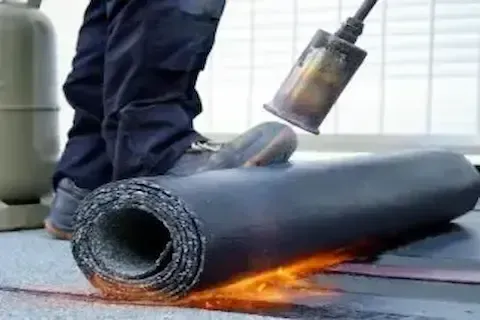
Torch Applied Modified Bitumen Risks in Coon Rapids MN
Modified bitumen roofing is one of the most dependable flat roof systems available for commercial and light industrial buildings in Coon Rapids. It handles Minnesota's freeze-thaw cycles well, holds up against heavy snow loads, and delivers long-term waterproofing performance when installed correctly. But not every installation method carries the same level of risk. Torch-applied modified bitumen, in particular, introduces an open flame to a rooftop environment filled with combustible materials. Understanding those risks — and the alternatives available to Anoka County building owners — is essential before any roofing project begins.
What Torch Application Actually Involves
Torch-applied modified bitumen, also called torch-down roofing, uses a propane-fueled open flame to heat the underside of rolled membrane sheets. As the bitumen softens, the installer presses the membrane against the substrate, bonding layers together through heat fusion. When done correctly by an experienced crew, the result is a strong, watertight seal. The problem is that "correctly" requires a high skill level, careful fire monitoring, and strict attention to every surface the flame touches — including insulation, wood blocking, parapets, and existing roofing substrate materials beneath the new membrane.
Fire Risks Specific to Coon Rapids Commercial Buildings
Coon Rapids has a mix of older commercial strips along Coon Rapids Boulevard, industrial properties near the rail corridors, and retail buildings that were constructed decades before modern fire-resistant roofing substrates became standard. Many of these structures have wood nailers, aged insulation, and combustible decking that can ignite when exposed to torch heat — even briefly.
The most serious fire risk with torch application is a smoldering fire inside the roof assembly. These fires can begin in insulation or at a wood nailer when the torch passes over them, but they don't produce visible flames immediately. A crew may complete an entire section of roof without detecting a slow-burn that continues for hours after they leave. By the time smoke becomes visible from inside the building, the fire has already spread through the insulation layer and potentially into the structural deck. This scenario has caused total losses on commercial buildings across Minnesota.
Beyond smoldering fires, open-flame work near rooftop HVAC curbs, gas line penetrations, and parapet walls with wood backing creates additional ignition exposure. Windy conditions — common in Anoka County during spring and fall roofing seasons — can push flame where it isn't intended to go.
Insurance and Liability Considerations
Many commercial property insurers in Minnesota have specific requirements around torch-applied roofing. Some carriers require a hot work permit and a fire watch period of one to two hours after torch work is completed. Others have exclusions or rate adjustments tied to torch-down installations on older structures. If your building in Coon Rapids has a wood deck or combustible insulation substrate, your insurer may require documentation of the installation method before renewing or writing a policy.
Building owners should confirm with their insurance carrier before selecting a torch-applied system. A roofing contractor who doesn't raise this topic before beginning the proposal process is either unaware of the issue or choosing not to address it. Either way, that's a concern worth noting.
Contractor Qualifications Matter More With Torch Work
Torch-applied modified bitumen is not a system where an inexperienced crew can learn on the job without serious consequence. The technique requires trained applicators who understand heat timing, substrate compatibility, and fire risk identification. In Minnesota, roofing contractors performing torch work on commercial buildings should carry appropriate licensing, maintain active general liability and workers' compensation coverage, and be familiar with local fire authority requirements in Anoka County.
When evaluating roofing contractors for a mod bit project, ask directly whether their crews are certified by the membrane manufacturer for torch application. Ask about their fire watch protocol and whether they've ever had a fire incident on a job site. These aren't uncomfortable questions — they're standard due diligence for any commercial building owner in Coon Rapids.
To learn more about how modified bitumen systems are structured and specified for commercial buildings in this area, review the details on modified bitumen roof systems before making final decisions about installation method.
Safer Installation Alternatives Worth Considering
Torch application is not the only way to install modified bitumen membrane. Two alternative methods eliminate the open flame entirely while still delivering the waterproofing performance and durability that make mod bit a preferred system on Coon Rapids flat roofs.
Self-adhered modified bitumen uses a peel-and-stick application. The membrane has a factory-applied adhesive backing that bonds to the substrate without heat. Installation is cleaner, faster in many conditions, and carries none of the fire risk associated with open flame work. Self-adhered systems are particularly well-suited for re-roofing projects where combustible materials are present beneath the new membrane layer.
Cold-process adhesive application uses a liquid adhesive applied to the substrate before the membrane is rolled into place. Like self-adhered systems, there is no open flame involved. Cold-process installations require careful surface preparation and appropriate adhesive selection for temperature conditions, but they are widely used on commercial buildings throughout Minnesota and carry a strong performance track record.
Both alternatives are compatible with modern SBS and APP modified bitumen membranes from major manufacturers. If a contractor tells you that torch application is the only way to get a quality result, that's worth questioning. The roofing industry has moved significantly toward flame-free installation options, and most reputable commercial roofing contractors in Anoka County can execute either method effectively.
Making the Right Choice for Your Building
For building owners in Coon Rapids weighing installation method options, the decision should start with an honest assessment of the substrate. If your building has a concrete deck, non-combustible insulation, and modern fire-resistant blocking, torch application may be viable with the right contractor and proper precautions. If your building is older, has wood components at the deck or parapet level, or sits in a densely occupied commercial corridor, the case for self-adhered or cold-applied installation becomes much stronger.
Cost is often cited as a reason to choose torch application. In practice, the labor cost difference between torch and self-adhered installation is less significant than many property owners assume, especially when factoring in the fire watch requirement, permit costs, and insurance implications that torch work can trigger. The Modified Bitumen Roofing options available in Coon Rapids cover all three application methods, so a direct cost comparison is easy to obtain from a qualified contractor.
A well-installed modified bitumen roof should protect a commercial building in Coon Rapids for 20 years or more. Choosing the installation method that minimizes fire risk, satisfies your insurer, and aligns with your building's structural characteristics is every bit as important as the membrane specification itself.
