TPO Membrane Thickness Choices for Coon Rapids Roofs
When you're selecting a flat roofing system for a commercial property in Coon Rapids, one of the most consequential decisions you'll face is choosing the right TPO membrane thickness. The thickness of your membrane affects how well it holds up against hail, foot traffic, UV exposure, and the punishing freeze-thaw cycles that Anoka County winters deliver year after year. Getting this choice right from the start can save you significant repair costs and extend the service life of your entire roofing system.
Understanding TPO Membrane Thickness Options
TPO membranes are manufactured in three standard thicknesses: 45 mil, 60 mil, and 80 mil. The measurement refers to the thickness of the membrane sheet in thousandths of an inch. Each tier represents a meaningful jump in material density, reinforcement strength, and field performance. The right option depends on your building's use, your roofing contractor's installation method, and what warranties you want to carry.
A 45 mil membrane is the thinnest option and represents the entry-level tier for commercial TPO applications. It works adequately on low-slope roofs with minimal foot traffic and is often chosen when upfront budget is the primary driver. However, in a climate like Coon Rapids, where hailstorms can arrive in late spring and roof surfaces must flex through months of subfreezing temperatures, the margin for error with a 45 mil sheet is narrow. Minor installation imperfections or small punctures that a thicker membrane would absorb can become active leaks more quickly.
Where 60 Mil TPO Fits Most Commercial Roofs
For the majority of commercial properties across Coon Rapids and the broader Anoka County market, 60 mil TPO is the practical standard. It offers a substantially thicker wear layer than the 45 mil option, which means better puncture resistance when HVAC technicians or maintenance crews walk the roof surface. The reinforcement scrim in a 60 mil sheet also handles the dimensional movement caused by Minnesota's extreme temperature swings more effectively.
Most major TPO manufacturers, including Firestone and GAF, extend their standard commercial warranties at the 60 mil thickness that they either limit or restrict entirely at 45 mil. If you're financing or refinancing a commercial property in Coon Rapids and your lender or insurer requires a manufacturer-backed roof warranty, the 60 mil tier is usually where those programs begin to be fully accessible. It also tends to be the minimum specification many roofing contractors will recommend when the job involves a mechanically fastened installation rather than a fully adhered one.
For property owners researching their options, understanding how different TPO systems are assembled is worth your time. Reading about TPO roofing for commercial buildings gives you a solid foundation before you start comparing thickness specifications with contractors.
When 80 Mil TPO Makes Sense
The 80 mil membrane occupies the premium tier and is not necessary for every application. However, certain Coon Rapids properties genuinely benefit from the upgrade. Buildings with rooftop mechanical equipment that generates regular technician visits, distribution or warehouse facilities with heavy HVAC infrastructure, and any commercial property with a history of hail damage are good candidates for the 80 mil specification.
Anoka County sees measurable hail activity most years, and impact resistance is one of the strongest arguments for the thicker membrane. Some insurance carriers have begun asking for documentation of membrane thickness when underwriting commercial flat roof policies, and an 80 mil membrane can strengthen that conversation. The cost difference over a 60 mil installation is real but rarely dramatic when calculated as a percentage of total project cost. On a modest commercial building, the premium for stepping up to 80 mil may represent only a few percent of the overall job cost while meaningfully extending the interval before the roof needs significant attention.
Heat Welding Quality Matters Across All Thickness Levels
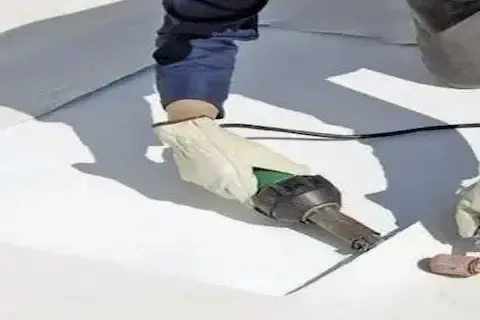
One factor that property owners sometimes overlook is that membrane thickness only delivers its promised performance if the seams are properly heat welded. TPO roofing relies on hot-air welded overlapping seams to create a watertight, monolithic surface. A poorly welded seam on an 80 mil membrane will fail sooner than a properly welded seam on a 60 mil membrane. This is why selecting a contractor with documented experience in TPO installation in the Coon Rapids area matters as much as choosing the right membrane specification.
Reputable TPO Roofing professionals use calibrated hot-air welding equipment and perform probe tests on seams after welding to verify bond strength. During your contractor evaluation process, ask specifically about their seam testing protocol and whether they use automatic welders for field seams or rely primarily on hand welders. Automatic welders produce more consistent heat profiles and are generally the preferred approach for long straight field seams on larger commercial roofs.
Cost Versus Long-Term Value in Anoka County
The price gap between 45 mil and 80 mil TPO is real, but framing the decision purely around upfront cost can be misleading. A 45 mil roof that requires repairs or replacement in eight to ten years may ultimately cost more than an 80 mil installation that performs for twenty-plus years with routine maintenance. Material cost per square foot increases as you move up in thickness, but labor costs for installation are largely the same regardless of membrane thickness. That means the percentage premium for a thicker membrane shrinks when viewed against total installed cost.
For Coon Rapids property owners, the local climate context should anchor every thickness decision. Roofs here must handle temperatures that swing from below zero in January to the high nineties in July, along with the mechanical stress of snow loads and the impact risk of hailstorms that move through the Twin Cities metro corridor seasonally. A membrane chosen primarily for low initial cost without accounting for these conditions is often a false economy.
Practical Guidance Before You Specify
Before finalizing a membrane specification, ask your roofing contractor to walk you through the warranty documentation for each thickness tier they're proposing. Confirm what the manufacturer's labor and material warranty covers, how many years it runs, and what maintenance requirements must be met to keep it active. Ask whether your building's occupancy and roof access pattern supports a thinner membrane or warrants the upgrade. Get the answer in writing as part of the project proposal so expectations are clear on both sides.
Thickness is one input in a larger system decision, but it's a consequential one. Taking the time to understand your options before the job begins is one of the more straightforward ways to protect your investment in a Coon Rapids commercial property.
