TPO Roof Installation Costs in Coon Rapids Buildings
Flat roofs on Coon Rapids commercial buildings take a beating. Between Minnesota's freeze-thaw cycles, heavy spring rainfall, and summer UV exposure, the membrane you choose has to perform season after season. TPO has become one of the most widely installed flat roofing systems in Anoka County precisely because it balances durability, energy efficiency, and cost. But "cost" is where property owners often get confused. The final number on a TPO installation proposal depends on a surprising number of variables, and understanding each one helps you evaluate bids more accurately and avoid paying for gaps in coverage you didn't know existed.
What Drives TPO Pricing on Commercial Flat Roofs
TPO pricing is not a single line item. It is a stack of components, and each layer has its own cost driver. When a contractor quotes you a price per square (one square equals 100 square feet), that number should reflect membrane material, insulation, fasteners, adhesive or ballast, labor, and overhead. If a quote looks unusually low, it usually means one of those components has been reduced in quality or excluded entirely.
Membrane thickness is one of the first variables to examine. TPO membranes are manufactured in 45-mil, 60-mil, and 80-mil thicknesses. In Minnesota's climate, 60-mil is the practical minimum for a commercial installation expected to last 20 or more years. The thicker the membrane, the more resistant it is to puncture, UV degradation, and stress from thermal movement. Moving from 45-mil to 60-mil adds cost, but it also adds meaningful service life and a stronger manufacturer warranty position.
Typical Price Ranges in the Coon Rapids Area
For a standard commercial TPO installation in Coon Rapids and the surrounding Anoka County market, property owners should budget in the range of $7 to $14 per square foot, depending on system specifications. That range breaks down roughly as follows:
- Tear-off and disposal: $0.75 to $1.50 per square foot, depending on existing roof layers and material weight
- Polyisocyanurate insulation board: $1.50 to $3.00 per square foot, depending on R-value requirements and board thickness
- TPO membrane (60-mil mechanically attached): $2.50 to $4.50 per square foot
- Labor and heat-welded seaming: $1.50 to $3.00 per square foot
- Edge metal, flashing, and penetration details: $0.50 to $1.50 per square foot depending on roof complexity
A straightforward 10,000 square foot warehouse roof in Coon Rapids with minimal penetrations and a single existing layer of material might land near the lower end of that range. A more complex retail or office building with HVAC curbs, drains, skylights, and multiple existing roof layers will move toward the upper end or beyond it.
For a full breakdown of system types and how TPO compares to other membrane options, see this overview of TPO roofing for commercial buildings before finalizing your specification decisions.
How Tear-Off Conditions Affect Your Final Number
One of the most significant cost variables on any re-roofing project is what is already on the building. Minnesota's commercial building stock includes many flat roofs that were built up with multiple layers over decades. When an existing system has more than one layer of material, most Anoka County municipalities and building codes require complete tear-off before a new membrane is installed. That tear-off labor, dumpster fees, and disposal costs can add several thousand dollars to a project quickly.
There is also the possibility of discovering wet or damaged insulation beneath the existing membrane. Infrared moisture surveys are commonly used in this market to assess the scope of the problem before work begins. If wet insulation is found, it must be replaced before the new membrane goes down. Skipping that step leads to reduced adhesion, trapped moisture cycling through freeze-thaw expansion, and premature system failure. A thorough contractor will price this risk honestly rather than present a low bid that inflates once the roof is open.
Insulation Choices and Minnesota Energy Codes
Minnesota's commercial energy code has continued to tighten insulation requirements over the past decade. For most Coon Rapids commercial buildings, the code-minimum R-value for a low-slope roof is significant, which pushes insulation costs upward compared to markets with milder climates. Polyisocyanurate board is the most common choice for TPO installations because it achieves high R-values per inch of thickness, which helps meet code without excessive roof height buildup at parapets and doorways.
Some building owners opt to exceed code minimum when re-roofing because the incremental cost of additional insulation at installation time is far lower than adding it later. On a building with high heating or cooling loads, the payback period for enhanced insulation can be relatively short when measured against reduced energy bills.
Warranty Tiers and What They Cost
TPO manufacturers offer warranty programs that range from basic 10-year material warranties to full-system 20-year or 25-year NDL (No Dollar Limit) warranties. The longer and more comprehensive the warranty, the stricter the installation requirements and the higher the associated premium. NDL warranties typically require a minimum membrane thickness, specific insulation types and fastening patterns, and installation by a manufacturer-certified contractor.
In practical terms, upgrading from a standard 10-year warranty to a 20-year NDL warranty on a mid-sized Coon Rapids commercial building may add $0.25 to $0.75 per square foot to your project cost. For a 15,000 square foot roof, that is roughly $3,750 to $11,250 in additional investment. Whether that cost is justified depends on how long you plan to hold the building, your lender's requirements, and the manufacturer's track record in this region.
Labor and Contractor Quality in Anoka County
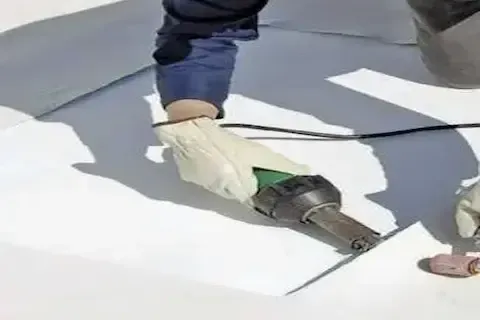
Seam quality is the most critical factor in TPO system longevity. TPO relies on heat-welded seams to create a watertight bond at overlaps. When those seams are welded at incorrect temperatures or speeds, they can appear solid but fail under thermal stress within a few seasons. Experienced crews working regularly in the Coon Rapids area understand the temperature and humidity conditions that affect weld quality and adjust their equipment accordingly.
Contractor overhead, insurance, and warranty fulfillment capability also factor into labor pricing. A lower bid from a crew without manufacturer certification may save money upfront but disqualifies you from the system warranties that protect your investment long-term. When collecting bids, confirm that each contractor is certified by the membrane manufacturer, carries appropriate commercial liability coverage, and has documented project history in the Anoka County market.
If you are ready to get a site-specific assessment of your building, connect with our TPO Roofing team to discuss your project scope, existing conditions, and the system specifications that fit your performance and budget goals.
Getting Accurate Bids for Your Building
The most reliable way to get accurate pricing for a Coon Rapids TPO installation is to require that every bidder walk the roof, review any existing documentation about current system conditions, and provide a written scope of work that identifies membrane thickness, insulation type and R-value, attachment method, warranty tier, and tear-off assumptions. Bids that lack this detail are impossible to compare accurately and often lead to change orders once work begins.
Flat roofing in Minnesota's climate rewards careful planning. Understanding where your project falls in the cost range, and why, gives you the foundation to make a sound investment in the building envelope.
