
TPO Roofing and Flat Roof Lifecycle Management for Andover MN Commercial Properties
TPO Systems and New Build Commercial Roofing in Andover
The commercial building inventory in Andover reflects a newer development timeline than the older Anoka County communities surrounding it. Business parks and strip retail along the Bunker Lake Boulevard and Highway 10 corridors carry more recent construction—many buildings erected from the late 1990s through the 2010s—which shifts the roofing conversation from emergency replacement to proactive maintenance and early lifecycle management. Newer TPO and EPDM installations still require scheduled inspection to catch seam performance issues, drain condition, and flashing integrity before minor deficiencies develop into water intrusion events. A roof installed in 2005 that has not been formally inspected since original installation is not a well-maintained asset—it is an uninspected liability, regardless of its apparent surface condition. Membranes operating without documented inspection histories are difficult to underwrite for extended manufacturer warranties or favorable property insurance terms. Medical office and professional building owners in Andover face specific considerations tied to occupancy requirements and tenant lease obligations. Water intrusion events in occupied professional space carry costs well beyond the roofing repair itself—interior finishes, equipment, and the reputational impact of a facility that cannot maintain a weathertight envelope. These operational realities make scheduled roof maintenance a risk management function rather than a discretionary line item in the commercial maintenance budget.
Flat Roof Maintenance for Andover MN Business Properties
Andover's newer commercial stock creates a different planning environment than markets with aging 1980s-vintage building inventories—but the roofing challenges are not absent, they are simply earlier in the lifecycle. Buildings with commercial roofing systems installed in the late 1990s and early 2000s are now reaching the midpoint of their designed service life, which is exactly the point where proactive assessment yields the most favorable outcomes for building owners. Restoration coating systems applied to a structurally sound and moisture-free membrane extend service life by 10 to 15 years at a fraction of full replacement cost—but this option only remains viable when the underlying system is evaluated before degradation progresses past the restoration threshold. Waiting for active leaks to trigger a commercial roofing response eliminates the restoration option and converts a manageable planned decision into an emergency replacement scenario at premium cost and compressed timeline. Property managers responsible for Andover's multi-tenant commercial buildings navigate roofing decisions within the constraints of occupancy schedules, lease renewal timelines, and capital planning cycles. Inspection documentation that characterizes remaining system life and projected replacement timing gives property managers the lead time needed to incorporate roofing capital expenditure into financial planning rather than absorbing it as an unplanned emergency expense. Commercial real estate activity in Andover increasingly incorporates documented roofing condition assessments in due diligence, influencing both valuations and lending decisions.
Commercial Membrane Systems for Andover Properties
TPO membrane systems are the standard specification for new commercial construction and replacement projects in Andover's business parks and retail corridors. Heat-welded seams, resistance to ponding water, and performance across wide temperature ranges make TPO well-suited to the rooftop conditions common in Anoka County commercial buildings. For building owners replacing an original system at its end of service life, TPO replacement offers a reset point with manufacturer warranty options unavailable to buildings maintained on a reactive repair basis. EPDM systems remain appropriate for specific applications in Andover's commercial inventory—particularly for buildings with low-slope configurations where cold-weather membrane flexibility is the primary performance requirement. The long-term field performance record of EPDM in Minnesota climates provides a documented risk profile that is well understood by commercial lenders, insurers, and building buyers in due diligence review. For mid-life commercial buildings in Andover where the membrane is performing adequately but showing early degradation signs, silicone or acrylic coating systems applied over a clean, dry membrane surface can extend service life and restore manufacturer warranty eligibility. This approach preserves the existing roof assembly, avoids tear-off cost and debris disposal, and defers full replacement capital expenditure while documenting an active maintenance program for insurance and lender purposes. The viability of restoration depends entirely on a thorough condition assessment conducted before the commitment is made—not after degradation eliminates the option.
Roof Repair and Warranty Management for Andover Businesses
Commercial roof repair for Andover business properties most commonly involves seam and flashing issues that develop as newer membrane systems age through their first decade of service. Heat-weld quality at installation, rooftop traffic from HVAC maintenance, and thermal movement at parapet walls are the primary sources of early-stage seam stress in TPO systems. Identifying and addressing these conditions during routine inspection prevents a localized seam failure from becoming a full interior water intrusion event. Medical and professional office buildings in Andover have specific repair scheduling requirements tied to occupancy sensitivity. Roof work above occupied patient care areas or active office environments requires careful access planning and sequencing to maintain appropriate conditions inside the building during repair activities. Same-day response to active leaks above occupied professional space is a priority—the interior damage cost from an uncontrolled leak in a finished medical or professional office environment exceeds repair costs many times over. Manufacturer warranty coverage for commercial roofing systems in Andover carries specific maintenance documentation requirements that many building owners are not actively tracking. Warranty claims made after a leak event are evaluated against the documented maintenance history of the system—buildings without inspection records may find warranty claims reduced or denied on the basis of inadequate maintenance. Establishing a documented inspection and maintenance program at any point in the system's life preserves warranty eligibility and creates the records needed to support future claims if membrane defects develop.
Preventive Inspection Programs for Commercial Property Managers
Replacement planning for Andover commercial properties requires matching the capital expenditure timeline to building-specific operational realities. For owner-occupied commercial buildings, replacement scheduling can align with the business cycle—Q3 inspection and scoping, permit filing through the City of Andover, and spring installation before the season's contractor demand peaks. This sequence gives building owners a fully permitted and scheduled project that proceeds predictably rather than reactively. Multi-tenant commercial buildings in Andover benefit from phased replacement planning that coordinates roofing access with tenant operations and lease schedules. Section-by-section replacement sequencing manages disruption to individual tenants and allows capital expenditure to be distributed across budget periods if full single-season replacement is not feasible. Tenant communication and coordination is part of commercial replacement project planning for occupied buildings—not an afterthought added when the project mobilizes. Long-range replacement forecasting for Andover property managers involves establishing a documented inspection baseline, characterizing remaining system life across the portfolio, and projecting replacement capital needs over a five-to-ten-year horizon. Property owners managing multiple buildings benefit from coordinated inspection programs that create comparative condition data across the portfolio, identifying which properties are approaching replacement threshold and allowing capital allocation decisions to be made from documented assessment rather than reactive emergency response. This approach removes roofing from the list of unplanned capital surprises.
Comprehensive Commercial Roofing Services in Coon Rapids
Tailored to Your Needs
From emergency flat roof repair to full TPO membrane replacement and standing seam metal panel installation, we serve commercial property owners across the Coon Rapids Highway 10 corridor and Anoka County with the complete commercial roofing service stack.
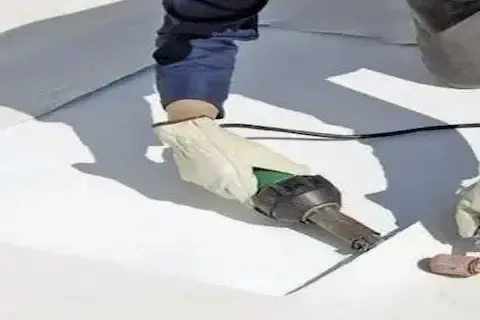
TPO membrane systems for commercial flat roofs on the Highway 10 corridor—heat-welded seams, cold-weather performance, and honest replacement cycle guidance for Coon Rapids property owners.
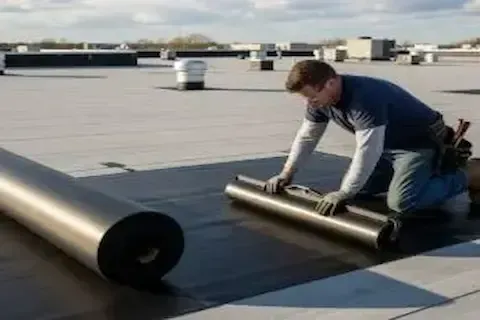
EPDM rubber roofing for Anoka County commercial buildings—proven 40-year track record in Minnesota winters with fully adhered and ballasted installation options.
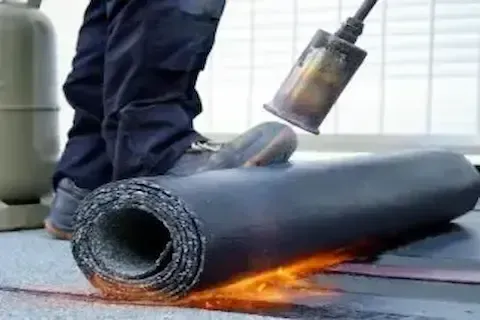
Modified bitumen roofing assessment and replacement for 1980s-vintage commercial buildings on the Coon Rapids and Anoka County commercial corridors.
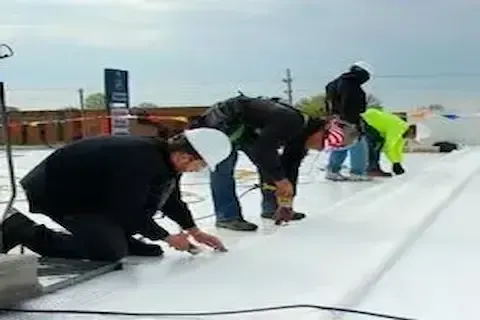
Same-day commercial roof leak response for Coon Rapids businesses—flashing repairs, seam patches, drain clearing, and temporary protection while permanent fixes are planned.
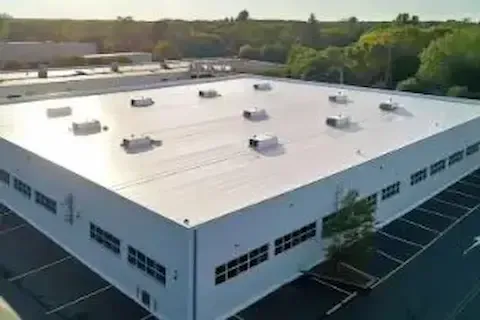
Full commercial flat roof replacement for end-of-life systems across Anoka County—permit management, system selection, and installation with no shortcuts.
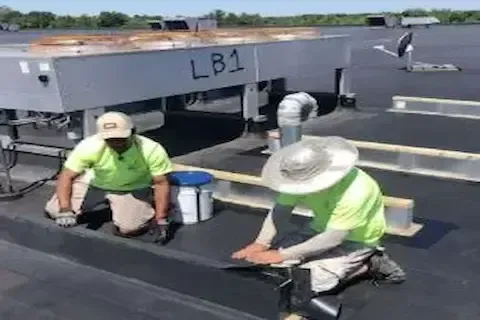
Documented commercial roof inspections for Coon Rapids property managers—written condition reports, prioritized repair recommendations, and remaining service life estimates.
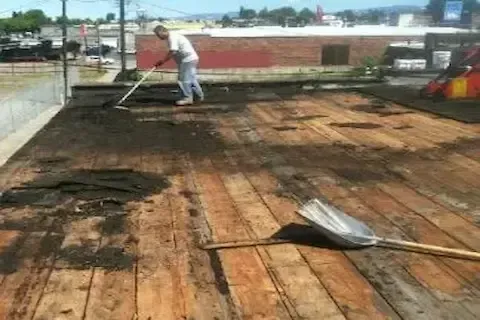
New commercial flat roof installation for Anoka County construction projects—TPO, EPDM, and modified bitumen systems installed to specification with full permit compliance.
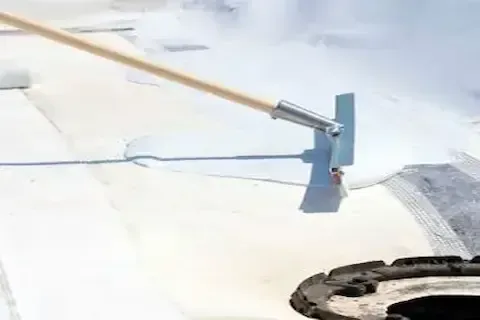
Silicone and acrylic roof coating restoration for qualifying commercial buildings—extend service life 10 to 15 years at 40 to 60 percent of full replacement cost.
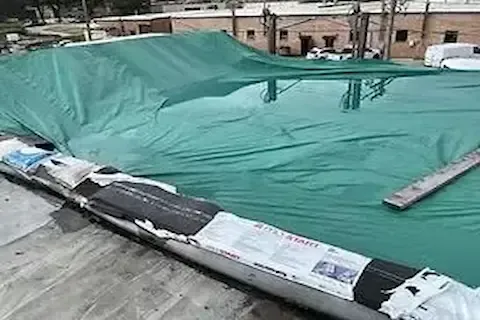
Emergency commercial storm damage response for Coon Rapids and Anoka County—carrier-ready documentation, temporary protection, and complete repair or replacement.
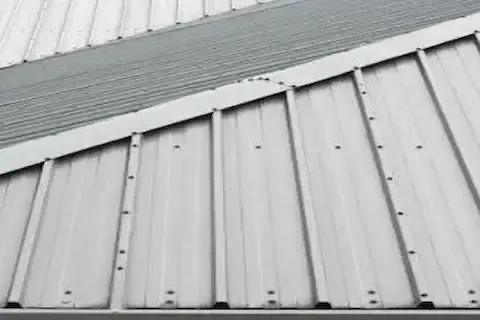
Standing seam and exposed fastener metal panel systems for commercial and industrial buildings across the Coon Rapids area—40-plus-year performance with minimal maintenance.
Frequently Asked Questions
Commercial Roofing can be complex, and we’re here to provide answers to common questions. Here are some frequently asked questions from our clients.
Frequently Asked Questions about Commercial Roofing Coon Rapids MN
What types of commercial roofing systems do you install in Coon Rapids, MN?
We install TPO, EPDM, modified bitumen, metal panel systems, and silicone roof coating restoration systems. For the 1980s-vintage commercial stock along the Highway 10 corridor, we assess whether coating restoration or full membrane replacement is the right call for each specific roof condition and budget before any project is proposed.
How long does a commercial roof replacement take in Coon Rapids?
Most commercial flat roof replacements in Coon Rapids take three to seven business days for mid-size buildings in the 5,000 to 20,000 square foot range. We schedule commercial projects to minimize disruption to tenants and building operations, and pull all required Anoka County permits before any crew mobilizes to the roof.
What are the signs my commercial flat roof needs repair or replacement?
Standing water that remains more than 48 hours after rain, blistering or bubbling membrane, interior ceiling stains, and seam or flashing separations are the most common indicators. For 1980s-era buildings along the Highway 10 corridor, age alone is a strong trigger—modified bitumen systems from that era are at or past their designed service life.
Do you handle insurance claims for commercial storm damage in Anoka County?
Yes. We document commercial storm damage for Anoka County insurance claims with time-stamped photos, written damage scope, hail size verification from public weather records, and carrier-formatted repair or replacement estimates. Hail events along the I-94 and Highway 10 corridors are well-documented and we understand what adjusters need to process commercial claims efficiently.
Is TPO or EPDM roofing better for commercial buildings in Minnesota?
Both perform well in Minnesota climates. TPO offers better UV resistance and is typically lower cost per square foot installed, making it the dominant specification for commercial re-roofing projects. EPDM has a longer proven track record in cold climates and is preferred where cold-weather flexibility is the priority. We assess each roof individually and recommend the right system for your building type and budget.
How often should a commercial flat roof be inspected in Coon Rapids, MN?
Twice per year is standard for commercial flat roofs in Minnesota—spring post-thaw and fall pre-winter. Buildings with older membrane systems, significant rooftop equipment loads, or history of ponding water benefit from quarterly inspections. We offer scheduled inspection programs for commercial property owners throughout Coon Rapids and Anoka County.
Need Commercial Roofing?
What Our Satisfied Clients Have to Say About Coon Rapids Commercial Roofing
We pride ourselves on delivering great results and experiences for each client. Hear directly from home and business owners who’ve trusted us with their Commercial Roofing needs.

We had an aging flat roof on our retail strip along Highway 10 that three contractors quoted as a full tear-off. This team inspected it properly and recommended a coating restoration that saved us over $40,000. They know commercial roofs.
Dave Kowalski
After a hail event in Anoka County we needed a commercial roofer who understood the insurance documentation process for our warehouse. They handled inspection, documentation, and carrier coordination without us managing a single detail.
Linda Gustafson
We own several commercial properties in Coon Rapids and have dealt with contractors who treat commercial like oversized residential jobs. These guys know flat roofs. TPO installation was clean, on schedule, and permitted correctly the first time through.
Tom Brennan
The Trusted Commercial Roofing Expert Near You
Ready to hear more about expert services at Coon Rapids Commercial Roofing?
Contact us today to receive a detailed, no-obligation quote.

Coon Rapids & the Twin Cities metro
Monday-Friday: 9am-5pm, Saturday: 11am-3pm
