
Commercial Flat Roofing for Anoka's Established Mixed-Age Building Market
Flat Roof Systems for Anoka's Commercial Corridors
Commercial properties across Anoka's established corridors carry building systems that span several construction eras. Strip retail along major roadways and light industrial sites near the county's development zones often still carry modified bitumen or built-up roofing assemblies installed decades ago. These systems were specified for a 20-year service life—many have been maintained well beyond that threshold through patchwork repair, but the underlying deck condition, membrane integrity, and drainage performance tell a more accurate story than surface appearance alone. As thermal cycling, ponding water, and rooftop equipment loads accumulate over time, seam separations and flashing failures become more frequent and more costly to address through localized repair. For property owners managing multiple tenant spaces or single-use commercial buildings, the decision point between continued repair investment and planned membrane replacement becomes a financial calculation as much as a roofing one. Understanding what a building's roof system can realistically deliver over the next five to ten years requires an assessment that goes beyond surface observation. Deck deflection, insulation moisture content, and internal drain performance all factor into what replacement timing looks like for Anoka commercial properties. Scheduling that evaluation in advance of a failure event is the difference between a planned capital project and an emergency replacement at compressed timelines and elevated cost.
Membrane Assessment and Replacement in Anoka MN
Property managers and building owners in Anoka face the same seasonal pressures that affect commercial roofing across the broader Twin Cities metro—winter ice load, spring thaw water intrusion, and summer UV degradation—but the local building stock adds a layer of complexity. Older construction used installation techniques and materials that respond differently to membrane overlayment than newer commercial substrates. A coating restoration that extends service life on a clean, dry membrane in good structural condition is a fundamentally different project than one applied over a deck showing long-term moisture accumulation beneath the surface. Commercial building transactions in Anoka County increasingly involve roofing condition reports as part of standard due diligence. For owners preparing a property for sale, refinancing, or a new lease cycle, documented roof assessments and maintenance records influence both valuation and negotiation positioning. Buildings with ongoing inspection records and documented repairs carry more favorable positioning than those with unknown service histories, regardless of apparent surface condition from ground level. Scheduling commercial roof inspections in late summer aligns with the optimal installation window before freeze conditions limit adhesive and membrane work—and positions replacement projects ahead of peak spring demand when contractor schedules tighten and lead times on membrane materials extend significantly across the metro.
TPO and EPDM Commercial Roofing Systems
TPO and EPDM single-ply membrane systems represent the current standard for commercial flat roof replacement across Anoka County, and for good reason. Both systems outperform the modified bitumen assemblies they commonly replace in terms of installation speed, seam reliability, and long-term UV performance. Heat-welded TPO seams create a continuous watertight bond that adhesive-applied systems cannot match over time—particularly relevant in climates with significant thermal cycling between seasons. For Anoka commercial buildings where the existing substrate is structurally sound and moisture-free, a TPO overlay system can extend service life by 15 to 20 years without the cost and disruption of full tear-off. When deck inspection reveals moisture intrusion or structural deterioration, a complete tear-off with new insulation board and fresh membrane installation resets the service life clock entirely and allows proper drainage slope correction where ponding has been a recurring concern. EPDM remains the preferred choice for applications where cold-weather flexibility is the primary performance requirement—its proven 40-year track record in Minnesota climates gives property owners and their lenders a well-documented risk profile. System selection depends on building geometry, rooftop equipment configuration, drainage design, and the owner's timeline for the property—factors determined during the pre-bid inspection rather than by material cost alone.
Commercial Roof Repair and Emergency Response
Commercial roof repair in Anoka's established building inventory requires distinguishing between a repair that buys meaningful time and one that delays an inevitable replacement at increasing cost. Active leaks in occupied commercial buildings create interior damage and tenant disruption that compounds quickly—ceiling systems, lighting, flooring, and stored inventory can all be affected within hours of an undetected penetration in the membrane or flashing assembly. Emergency response to active leaks prioritizes stopping interior damage first. Temporary membrane patches and tarping solutions stabilize the situation while a full scope assessment determines whether permanent repair or planned replacement is the appropriate path forward. For buildings with localized damage—storm-related punctures, isolated flashing failures, or seam separations at equipment penetrations—targeted repair extends system life when the surrounding membrane is otherwise intact and performing adequately. Preventive maintenance programs for Anoka commercial properties structure inspections around the two critical transition points in the Minnesota calendar: spring post-thaw assessment identifies damage from ice and thermal stress accumulated over winter, and fall pre-freeze inspection catches developing issues before cold temperatures limit available repair window options. Commercial buildings operating under active preventive maintenance programs consistently show lower lifetime roofing costs than those managed on a reactive repair basis, with fewer emergency events and more predictable capital replacement timelines.
Flat Roof Assessment and Replacement Planning
Flat roof replacement planning for Anoka commercial buildings begins with an assessment that evaluates the full system—not just the membrane surface. Deck condition, insulation R-value, internal drain performance, and existing penetration configurations all inform both the replacement specification and the project cost. Skipping this step produces bids that do not accurately reflect what the project will require once tear-off reveals conditions hidden under the existing membrane assembly. For multi-tenant commercial properties, replacement sequencing matters as much as the technical specification. Phased replacement across sections minimizes tenant disruption and can align capital expenditure with lease renewal cycles or property financing schedules. For single-use commercial buildings, replacement timing tied to Q3 planning allows full Anoka County permitting before the optimal spring installation window opens, positioning the project ahead of peak scheduling demand. Replacement budget planning should account for the full project scope: tear-off and disposal, insulation upgrade if current values fall below applicable requirements for reroofing, new membrane installation, flashing replacement at all penetrations and parapet conditions, and internal drain replacement where existing drains show deterioration. A well-scoped replacement bid reflects actual project cost and eliminates the change orders that routinely expand budgets on projects where the assessment phase was compressed or skipped entirely.
Comprehensive Commercial Roofing Services in Coon Rapids
Tailored to Your Needs
From emergency flat roof repair to full TPO membrane replacement and standing seam metal panel installation, we serve commercial property owners across the Coon Rapids Highway 10 corridor and Anoka County with the complete commercial roofing service stack.
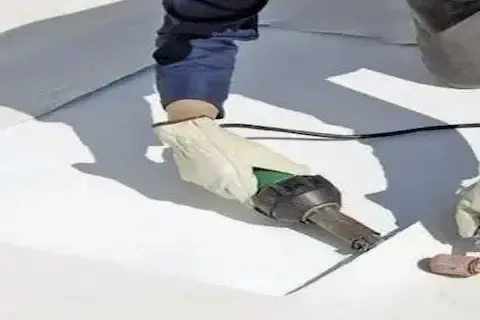
TPO membrane systems for commercial flat roofs on the Highway 10 corridor—heat-welded seams, cold-weather performance, and honest replacement cycle guidance for Coon Rapids property owners.
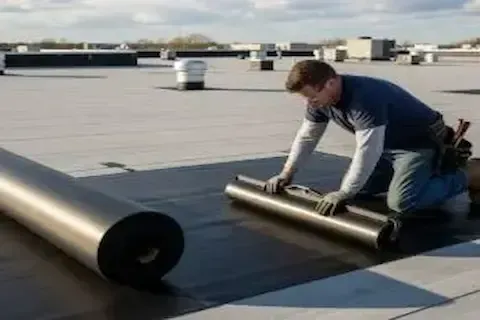
EPDM rubber roofing for Anoka County commercial buildings—proven 40-year track record in Minnesota winters with fully adhered and ballasted installation options.
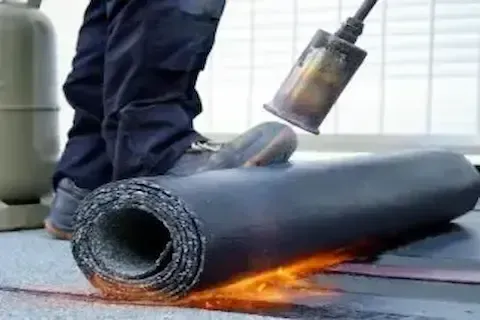
Modified bitumen roofing assessment and replacement for 1980s-vintage commercial buildings on the Coon Rapids and Anoka County commercial corridors.
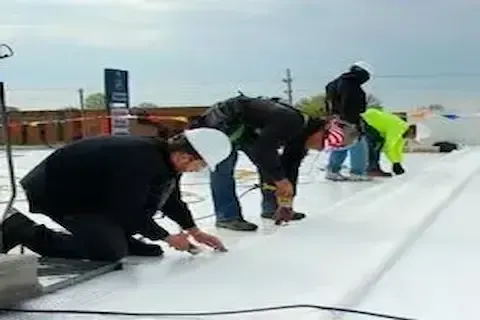
Same-day commercial roof leak response for Coon Rapids businesses—flashing repairs, seam patches, drain clearing, and temporary protection while permanent fixes are planned.
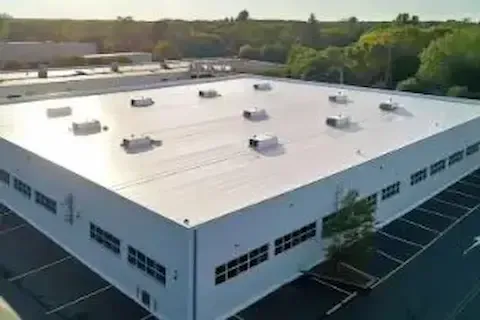
Full commercial flat roof replacement for end-of-life systems across Anoka County—permit management, system selection, and installation with no shortcuts.
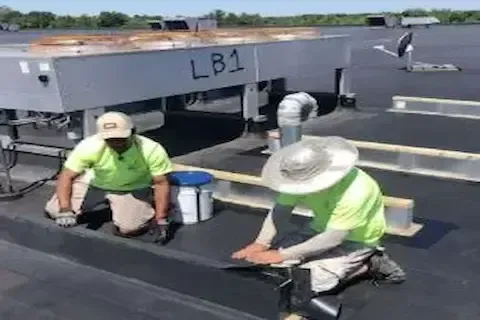
Documented commercial roof inspections for Coon Rapids property managers—written condition reports, prioritized repair recommendations, and remaining service life estimates.
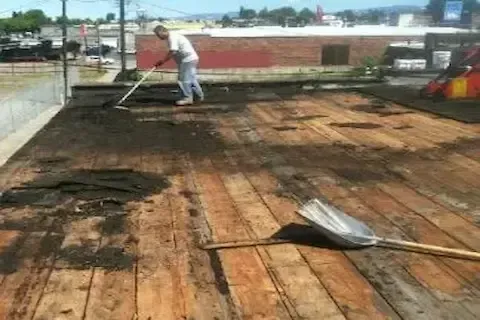
New commercial flat roof installation for Anoka County construction projects—TPO, EPDM, and modified bitumen systems installed to specification with full permit compliance.

Silicone and acrylic roof coating restoration for qualifying commercial buildings—extend service life 10 to 15 years at 40 to 60 percent of full replacement cost.
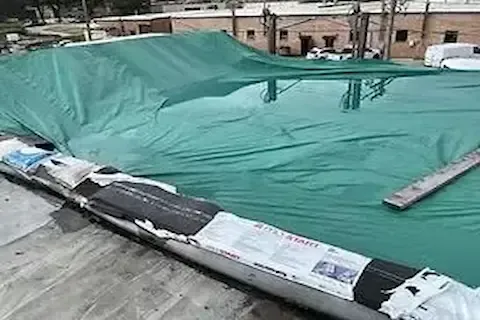
Emergency commercial storm damage response for Coon Rapids and Anoka County—carrier-ready documentation, temporary protection, and complete repair or replacement.
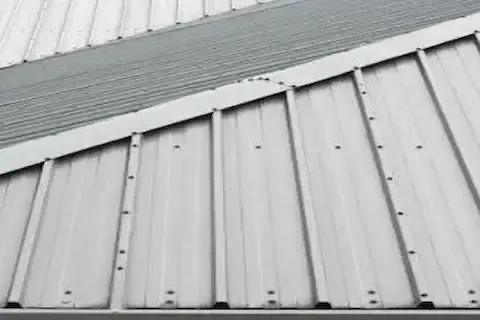
Standing seam and exposed fastener metal panel systems for commercial and industrial buildings across the Coon Rapids area—40-plus-year performance with minimal maintenance.
Frequently Asked Questions
Commercial Roofing can be complex, and we’re here to provide answers to common questions. Here are some frequently asked questions from our clients.
Frequently Asked Questions about Commercial Roofing Coon Rapids MN
What types of commercial roofing systems do you install in Coon Rapids, MN?
We install TPO, EPDM, modified bitumen, metal panel systems, and silicone roof coating restoration systems. For the 1980s-vintage commercial stock along the Highway 10 corridor, we assess whether coating restoration or full membrane replacement is the right call for each specific roof condition and budget before any project is proposed.
How long does a commercial roof replacement take in Coon Rapids?
Most commercial flat roof replacements in Coon Rapids take three to seven business days for mid-size buildings in the 5,000 to 20,000 square foot range. We schedule commercial projects to minimize disruption to tenants and building operations, and pull all required Anoka County permits before any crew mobilizes to the roof.
What are the signs my commercial flat roof needs repair or replacement?
Standing water that remains more than 48 hours after rain, blistering or bubbling membrane, interior ceiling stains, and seam or flashing separations are the most common indicators. For 1980s-era buildings along the Highway 10 corridor, age alone is a strong trigger—modified bitumen systems from that era are at or past their designed service life.
Do you handle insurance claims for commercial storm damage in Anoka County?
Yes. We document commercial storm damage for Anoka County insurance claims with time-stamped photos, written damage scope, hail size verification from public weather records, and carrier-formatted repair or replacement estimates. Hail events along the I-94 and Highway 10 corridors are well-documented and we understand what adjusters need to process commercial claims efficiently.
Is TPO or EPDM roofing better for commercial buildings in Minnesota?
Both perform well in Minnesota climates. TPO offers better UV resistance and is typically lower cost per square foot installed, making it the dominant specification for commercial re-roofing projects. EPDM has a longer proven track record in cold climates and is preferred where cold-weather flexibility is the priority. We assess each roof individually and recommend the right system for your building type and budget.
How often should a commercial flat roof be inspected in Coon Rapids, MN?
Twice per year is standard for commercial flat roofs in Minnesota—spring post-thaw and fall pre-winter. Buildings with older membrane systems, significant rooftop equipment loads, or history of ponding water benefit from quarterly inspections. We offer scheduled inspection programs for commercial property owners throughout Coon Rapids and Anoka County.
Need Commercial Roofing?
What Our Satisfied Clients Have to Say About Coon Rapids Commercial Roofing
We pride ourselves on delivering great results and experiences for each client. Hear directly from home and business owners who’ve trusted us with their Commercial Roofing needs.

We had an aging flat roof on our retail strip along Highway 10 that three contractors quoted as a full tear-off. This team inspected it properly and recommended a coating restoration that saved us over $40,000. They know commercial roofs.
Dave Kowalski
After a hail event in Anoka County we needed a commercial roofer who understood the insurance documentation process for our warehouse. They handled inspection, documentation, and carrier coordination without us managing a single detail.
Linda Gustafson
We own several commercial properties in Coon Rapids and have dealt with contractors who treat commercial like oversized residential jobs. These guys know flat roofs. TPO installation was clean, on schedule, and permitted correctly the first time through.
Tom Brennan
The Trusted Commercial Roofing Expert Near You
Ready to hear more about expert services at Coon Rapids Commercial Roofing?
Contact us today to receive a detailed, no-obligation quote.

Coon Rapids & the Twin Cities metro
Monday-Friday: 9am-5pm, Saturday: 11am-3pm
